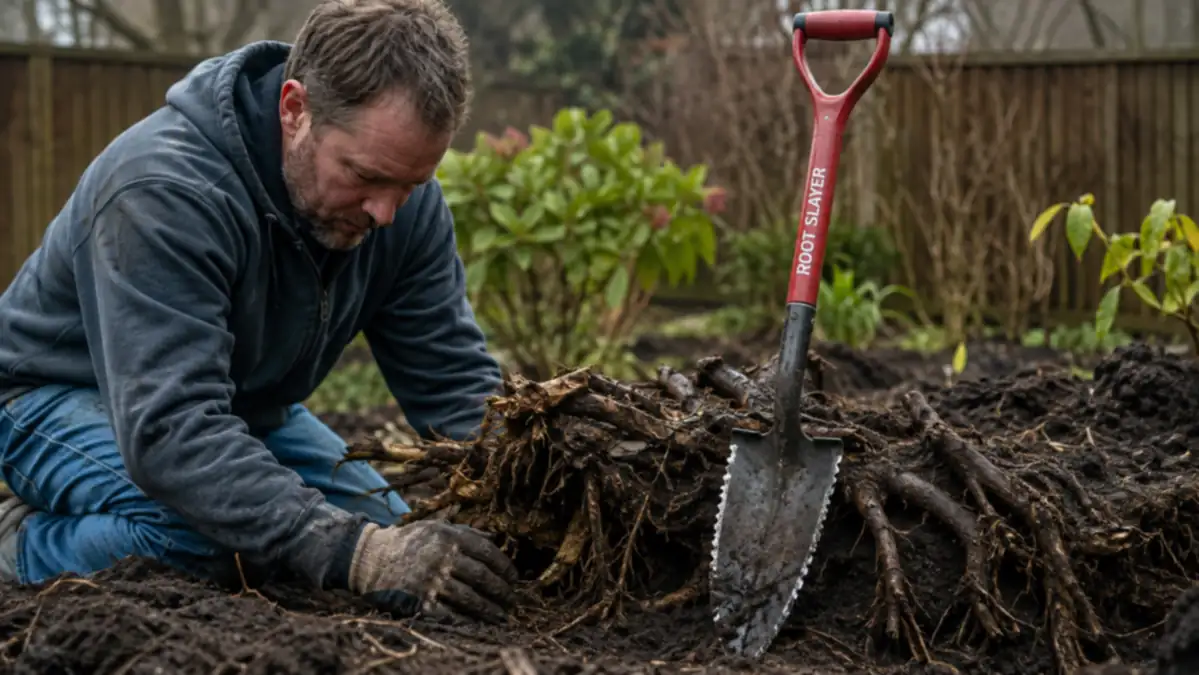
I've got a silver maple at the back corner of my property that's been there longer than I have, and its roots have quietly taken over half of my back planting bed. Every time I tried to put a new shrub or perennial in that bed, my old flat spade would hit a root the width of my wrist and just bounce off. Last April I finally got tired of it and bought the Root Slayer serrated shovel, the one with the red D-handle and the saw-toothed blade edges, specifically to deal with that root mess once and for all.
I've now used it through a full digging season, April through October, on that root-bound back bed, a run of raised beds I expanded in June, and one stump removal job I probably should have hired out. This is what I found, the good and the parts that took more muscle than the marketing photos suggest.
The Quick Verdict
A genuinely different kind of shovel that saws through roots most spades just bounce off of, though it's heavier than a standard spade and asks more of your shoulders on long digging days.
Amazon Check Today's Price →Tired of a flat spade that just bounces off every root in your way?
The Root Slayer's serrated blade edges let me saw straight through roots that used to stop my old spade cold. Check today's price on Amazon before your next planting project turns into a wrestling match.
Amazon Check Today's Price on Amazon →How I've Used It
My yard sits on heavy clay, the kind that turns to something like modeling clay when it's wet and cracks like pottery when it dries out. Add the silver maple's roots running through the back bed and I was dealing with the two hardest things to dig through at the same time. Over the season I used the Root Slayer maybe twice a month on average, more during the spring planting push and again in early fall when I split and moved a few perennials.
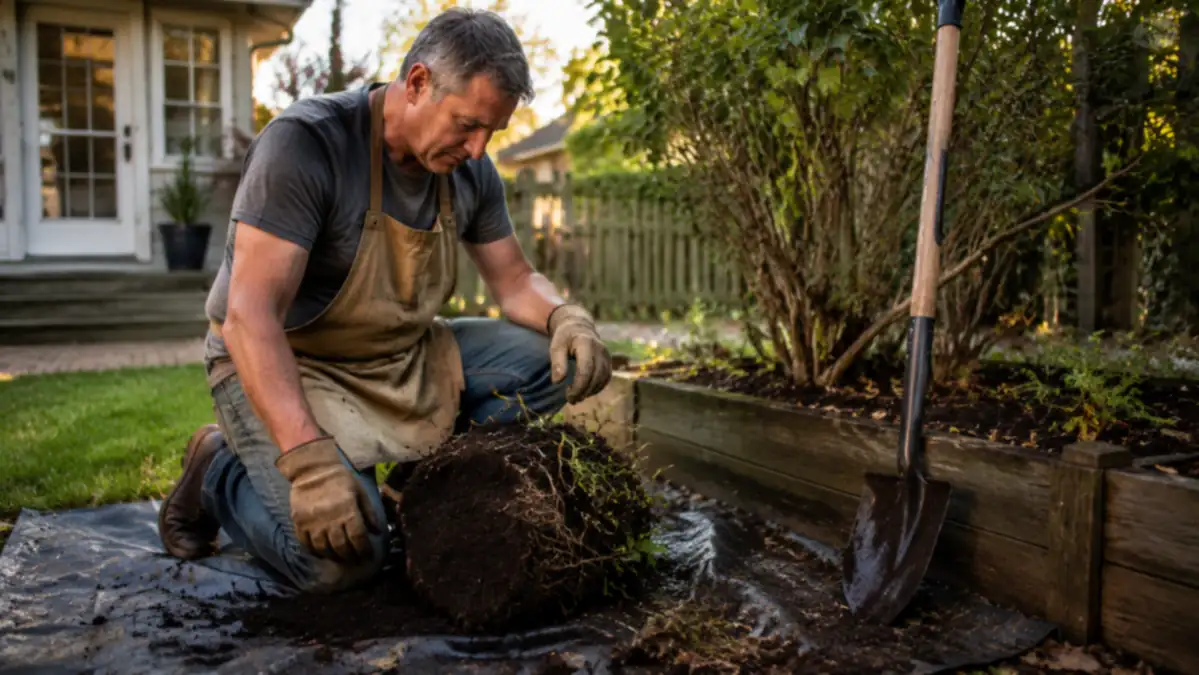
The first job was the real test. I needed to dig a hole for a new viburnum right up against the root zone, and I knew from years of fighting that bed that a standard spade was going to be useless there. I pushed the Root Slayer's serrated tip down at an angle, rocked it against the first root I hit, and instead of the usual bounce, it actually bit in. A few back and forth saws and the root gave way. That alone told me this tool was built for a different problem than my old spade.
By the end of the season I'd used it to dig eleven new planting holes, expand three sections of raised bed border, and dig out one overgrown forsythia I was moving to the side yard. It became the tool I reach for first now anytime I'm digging anywhere near that maple, or honestly anywhere in the yard where I'm not sure what I'll hit underground.
The Serrated Blade and Root Cutting
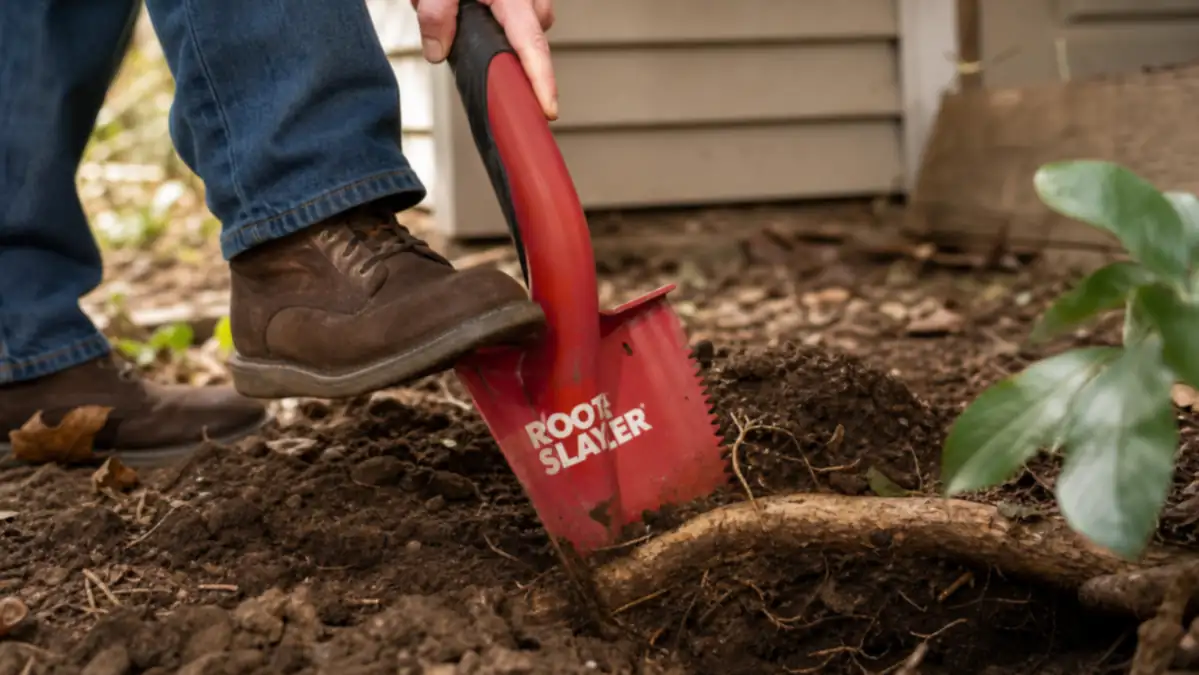
The whole point of this shovel is the serrated edges running down both sides of the blade, like a bread knife turned into a digging tool. On thin roots, anything under about half an inch, it works almost exactly like you'd hope. You push down, get a little resistance, and the root parts cleanly instead of tearing or requiring you to switch to loppers halfway through a dig.
On the thicker roots, the ones closer to an inch and a half that I hit near the base of the maple, it took real effort. I had to work the blade back and forth in a sawing motion, sometimes for a solid minute on the worst ones, before the root finally gave. That's not a knock on the tool exactly, roots that size would stop a hand saw for a while too, but I want to be honest that this isn't a one-push miracle on mature roots. It's a genuine improvement over a flat spade, not a chainsaw.
I also noticed the pointed, slightly concave tip made a real difference getting the blade started in tight spots, like wedging it between two roots to work a smaller root out without disturbing the bigger ones around it. My old spade would just slide off the surface in situations like that. If you want the full breakdown of why the serrated edge changes the whole digging equation, I laid out ten specific ways it helped me in a separate piece on why a serrated shovel cuts through roots better than a standard spade.
Digging Through Heavy Clay
Clay is its own separate fight from roots, and the Root Slayer handles that side of things well too, though for a slightly different reason than I expected. The blade is narrower and more pointed than a typical flat spade, which meant less surface area fighting the suction that wet clay creates when you try to pull a spade back out of the ground. On my worst clay days, the kind where a normal spade comes out with a wet sucking sound and half the hole's walls collapsing with it, the Root Slayer came out cleaner more often than not.
Dry clay in late summer is the opposite problem, hard as brick and unwilling to take a blade at all. There the serrated edge actually helped again, letting me saw a starting notch into the crust before pushing the blade in fully, rather than just standing on the shoulder of the blade and hoping my body weight was enough. It's not a miracle worker on baked clay, nothing really is short of a pickaxe or watering the area the night before, but it gave me a better starting point than my old tools did.
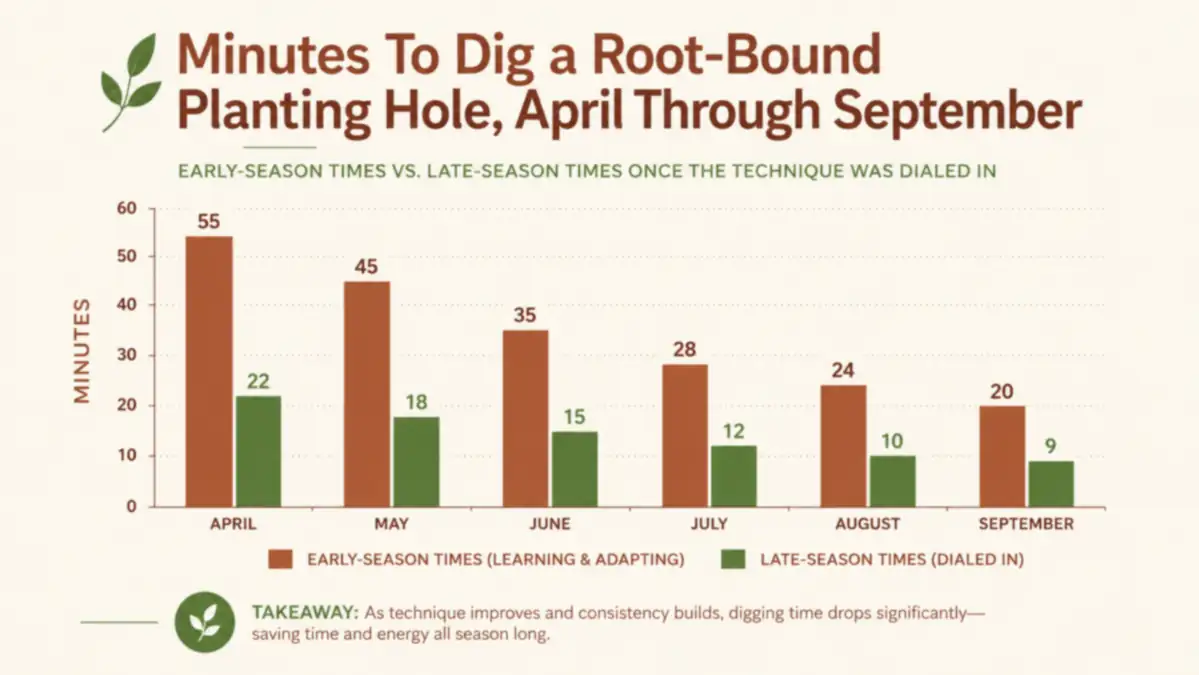
I tracked roughly how long each new planting hole took me across the season, out of curiosity more than anything, and the early-spring holes near the wettest, root-heaviest part of the bed took noticeably longer than the ones I dug in September once I'd figured out the right sawing rhythm. Technique matters more with this tool than with a plain spade, and it took me a few uses to stop muscling it like a shovel and start working it more like a saw.
Handle, Grip, and Weight
The D-handle is comfortable, and the steel shaft feels solid rather than the flexy, slightly hollow feeling I've gotten from cheaper shovels in the past. There's a foot step built into the top of the blade too, which mattered more than I expected once I was working in that dense clay, because I needed real downward force to get the blade started and my boot needed somewhere sturdy to push.
Where I noticed the tradeoff is weight and length. This shovel is heavier than my old standard spade, and the shorter shaft means more bending at the waist compared to a full-length spade or a long-handled digging fork. On the days I was doing a lot of digging back to back, three or four holes in a row, my lower back let me know about it by the end. I'm 61, and I've had to get smarter about pacing myself with any digging tool, this one included. If you've got a bad back or knees, I'd plan on breaks between holes rather than pushing through a big project in one go.
Durability Over a Full Season
I babied this tool a little at first, rinsing the clay off after every use and wiping the blade down before it went back in the shed. By midsummer I'd gotten lazier about that, and it still held up fine. The serrated edges stayed sharp enough to keep biting into roots even after hitting rock and buried construction debris a couple of times, which surprised me given how thin those teeth look up close.
The one spot showing wear after the season is a small patch of surface rust near the foot step, from the couple of times I left it out overnight after a late digging session instead of putting it away. That's on me, not the tool, but it's worth mentioning because a shovel like this spends more time getting stomped on and dragged through abrasive clay than a lot of other garden tools, and I'd expect that foot step to be the first place wear shows up long term.
What Else I Considered
Before buying this, I looked hard at just sticking with my standard flat spade and adding a separate root saw for the occasional stubborn root. That's a workable setup if you rarely deal with roots, but with a mature tree in the yard, I was hitting roots often enough that switching tools mid-dig got old fast. I put together a closer side-by-side if you're weighing the same decision, in a piece on the Root Slayer versus a standard garden spade that breaks down where each one actually wins.
I also thought about a root saw or pruning saw used alongside a regular spade instead of a combined tool. That setup gives you a sharper, more purpose-built saw blade for really thick roots, but it means carrying two tools out to the bed and switching back and forth constantly, which got tiresome on jobs where I was hitting new roots every foot or two. Having the cutting edge built right into the digging blade saved me real time once I got used to the sawing motion. As with any tool, what matters most is what it saves you in frustration over a season, not the number on the price tag, and I never look at that number alone. Check today's price on Amazon if you're curious where it lands right now.
Where It Struggled
I want to be straight about the tradeoffs. The extra weight compared to a standard spade is real, and if you're doing a lot of digging in one session, your arms and back will feel it sooner than with a lighter tool. It's also not a substitute for loppers or a proper pruning saw on roots over two inches thick, those still need a different tool or a lot more patience than I had on my worst day with the maple.
The shorter handle length compared to a full-size spade also means more bending, which is worth knowing if you've got back trouble. And the narrower blade, while great for getting through roots and clay, moves less soil per scoop than a wide flat spade, so if most of your digging is soft open soil with no roots to speak of, this probably isn't the most efficient tool for that job specifically.
What I Liked
- Serrated edges genuinely cut through roots that stop a standard spade cold
- Pointed, narrower blade handles heavy clay with less suction and less struggle
- Solid steel construction, no flex or hollow feeling under real force
- Built-in foot step gives real leverage for driving the blade into hard, dry soil
- Held a working edge all season despite hitting rocks and buried debris
Where It Falls Short
- Heavier than a standard spade, noticeable on long back-to-back digging sessions
- Shorter handle means more bending, harder on a bad back or knees
- Thick roots over an inch and a half still take real sawing effort and time
- Narrower blade moves less soil per scoop in open, root-free ground
- Foot step showed light surface rust after a couple of nights left outdoors
A few back and forth saws and the root gave way. That alone told me this tool was built for a different problem than my old spade.
Who This Is For
If you've got mature trees or shrubs anywhere near your beds and you're tired of your spade bouncing off roots every time you try to plant something new, this shovel earns its spot in your shed. It's also a strong fit for anyone dealing with heavy clay soil, since the narrower, more pointed blade fights the suction and cracking that clay throws at a wider spade. Anyone digging out an overgrown shrub, splitting perennials near a root zone, or putting in a new bed close to a tree line will get real use out of it.
Who Should Skip It
If your soil is soft, loamy, and mostly free of roots, a lighter standard spade will probably serve you better and with less arm fatigue over a big project. And if you've got a genuinely bad back or shoulder, the extra weight and shorter handle are worth weighing carefully before you commit to a full afternoon of digging with it. For anyone dealing with roots over two inches thick on a regular basis, you'll still want loppers or a pruning saw on hand, since even a serrated blade like this one asks a lot of patience on the biggest roots.
One season in and I finally stopped fighting that maple's roots every time I plant something.
If roots or heavy clay are turning every planting job into a fight, don't spend another weekend bouncing a flat spade off the same stubborn spot. See today's price on the Root Slayer serrated shovel on Amazon.
Amazon Check Today's Price on Amazon →