
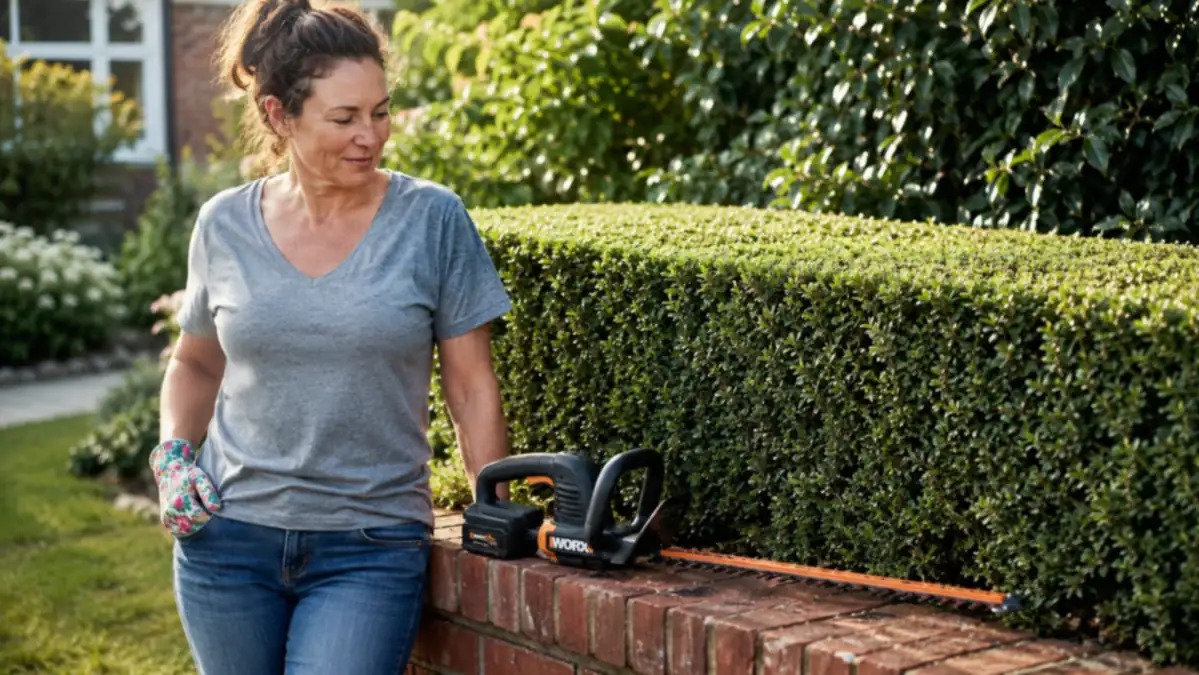
Every April I walk out to the front border and my boxwoods look like they grew a second coat over the winter. This year was worse than most. The two hedges flanking my front walk had gone shaggy and lopsided, and the long privet hedge along the driveway had a good foot of new growth hanging over the pavement. My old corded electric trimmer had died the previous fall, cord and all, so I went looking for something cordless that could actually get through a full afternoon without me tripping over an extension cord or running back to an outlet. That search landed me on the WORX 22-inch cordless hedge trimmer, model WG261, and I've now put it through one complete trimming season, from that first shaggy boxwood in April through the last privet cleanup in September.
WORX has a reputation for making tools that punch above their price without being fussy, and this trimmer kept coming up in every comparison I read. It ships with the battery and charger included, which mattered to me because I didn't want to buy a bare tool and then discover I needed a separate battery purchase just to turn it on. I want to walk you through what a real season with it looked like, boxwoods, privet, a stubborn holly hedge I inherited from the previous owner, and all.
The Quick Verdict
A genuinely capable cordless trimmer that made quick, even work of boxwood and privet hedges all season, though the battery runtime thins out on the longest jobs and the 22-inch blade asks for a couple of passes on thicker overgrowth.
Amazon Check Today's Price →Still wrestling a cord around the yard or hacking at hedges with dull manual shears?
The WORX 22-inch cordless hedge trimmer gave me clean, even lines without dragging a cord behind me all afternoon. Check today's price on Amazon before your hedges get away from you again.
Amazon Check Today's Price on Amazon →How I've Used It
My yard is a fairly typical suburban lot, a quarter acre with two boxwood hedges by the front walk, a long privet hedge running along the driveway, and a holly hedge in the backyard that the previous owner clearly never bothered to shape. Over a full trimming season, April through September, I used the WORX trimmer roughly every three to four weeks, which is about how fast boxwood and privet push new growth once the weather warms up.
I kept a rough tally on my phone of how long each charge lasted and how the cuts looked, because I wanted to know if the trimmer held up past the honeymoon period of the first outing. The short answer is that it did, with a couple of real caveats I'll get into, because I don't think a review is worth much if it skips the parts that didn't go perfectly.
The boxwoods were the easiest test. They're dense but the branches are thin, and the WORX trimmer's dual-action blades sliced through them without any bogging down. I could square off the tops and sides in about fifteen minutes per hedge, which used to take me closer to forty with the old corded model because I kept having to reposition around the cord. The holly hedge out back was the real stress test, thicker stems, some of them close to a quarter inch, and a season's worth of neglect built into the shape. That one took real patience and a couple of extra passes, but the trimmer got through it without stalling or the motor bogging down the way I half expected it to.
The Blades and the Cut
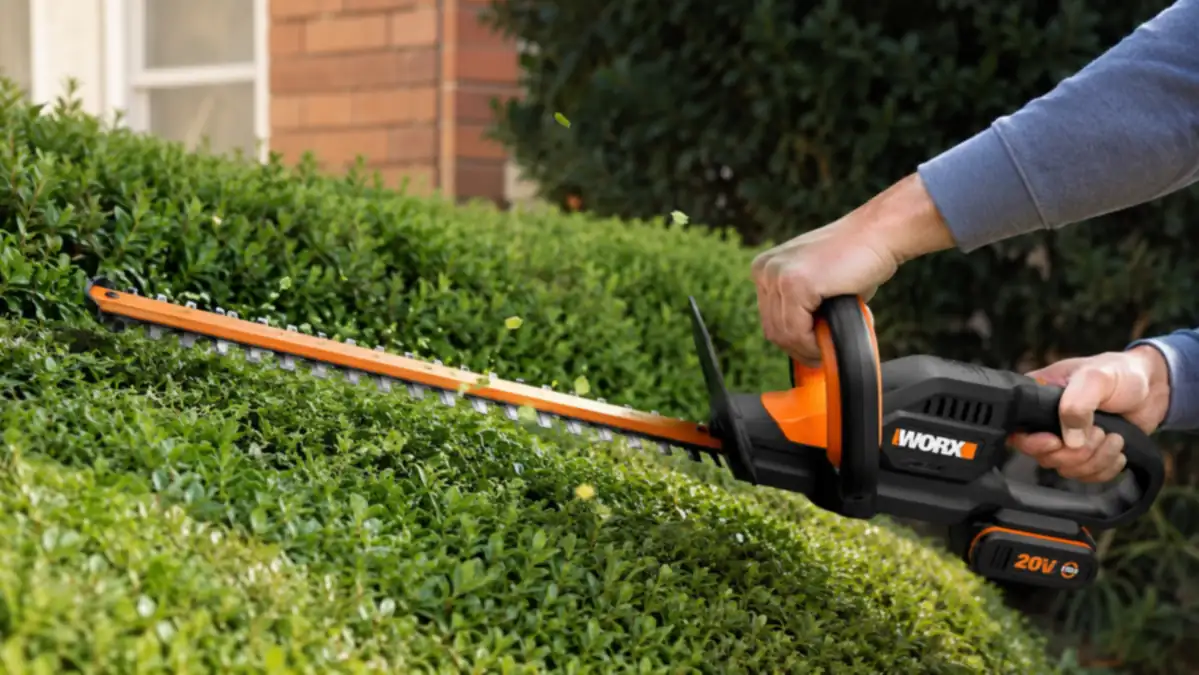
The WORX trimmer uses a 22-inch dual-action blade, which means both sides of the blade move in opposite directions at once. That design cancels out a lot of the vibration you'd get from a single-action blade, and I noticed it right away. My hands didn't buzz and tingle the way they used to after twenty minutes with my old trimmer, which matters more than it sounds because vibration fatigue is exactly what makes a long hedge job feel miserable by the end.
The cut itself is clean on anything within its rated capacity, thin boxwood leaves and stems up to about three-eighths of an inch. On the thicker holly stems, closer to a quarter inch and woodier at the base, I got a clean cut most of the time but occasionally had to go back over a spot for a second pass. That's not really a knock against the tool, it's just the honest limit of a 22-inch hedge trimmer built for shaping and maintenance rather than heavy renewal cutting on overgrown, woody hedges. If your hedge needs hard cutback work on branches thicker than a pencil, that's really a job for loppers first, and this trimmer for shaping after.
One detail I appreciated after a full season is how little the blade gummed up with sap. Boxwood in particular can leave a sticky residue on a blade, and my old trimmer used to slow down noticeably by the second pass of the day once sap built up in the teeth. I wiped the WORX blade down with a rag after each use, and it never bound up or dragged the way the old one did, even on back-to-back trimming days during the peak growth weeks in June.
Battery Life and Runtime
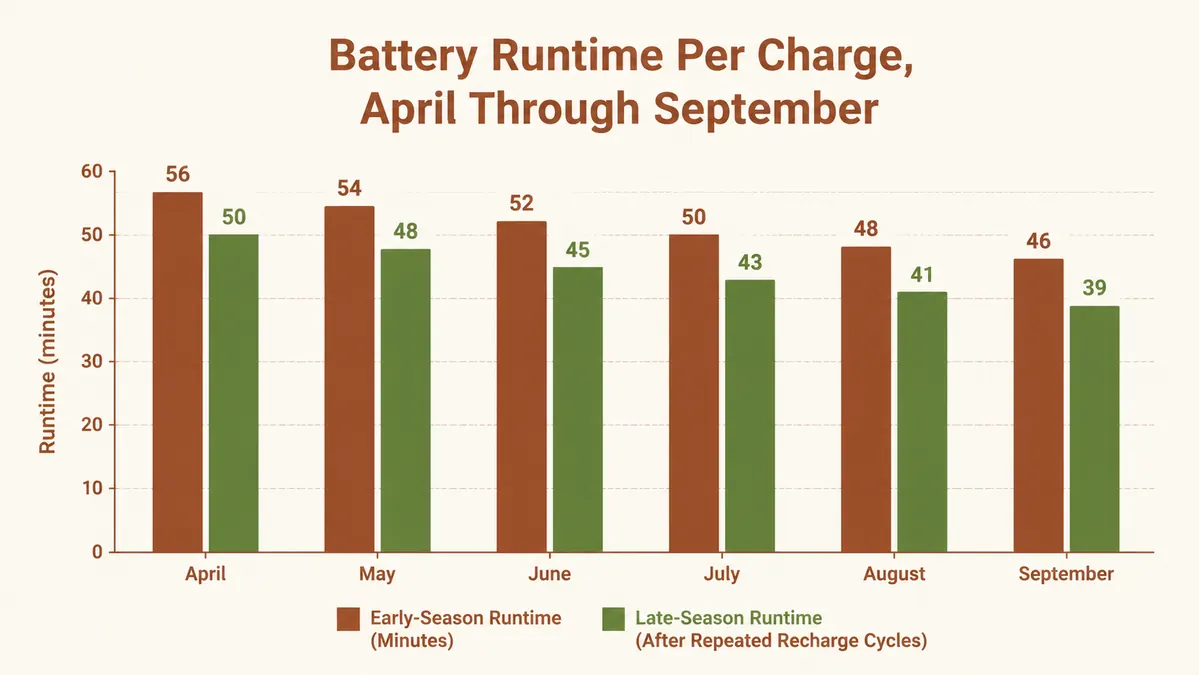
This is the part I want to be straight about, because it's where cordless tools tend to oversell themselves. A fresh full charge got me through both boxwood hedges and about half the privet run before the trimmer noticeably lost power, roughly 30 to 35 minutes of real cutting time depending on how dense the growth was that visit. That's enough for most of my regular maintenance trims, but on the two big seasonal cutbacks, once in late spring and once at the end of summer, I had to charge the battery a second time partway through to finish the whole yard in one day.
By late summer, after roughly five months of regular charging cycles, I noticed the runtime had dropped a bit from that early-season 30 to 35 minute mark, closer to 25 minutes on a full charge. That's a normal pattern for lithium-ion batteries under regular use, not something unique to this trimmer, but it's worth planning around if you've got a bigger hedge run than mine. I'd recommend anyone with more than about 40 linear feet of hedge keep the charger handy and plan for a midday top-up on the big seasonal trims.
Weight, Balance, and Handling
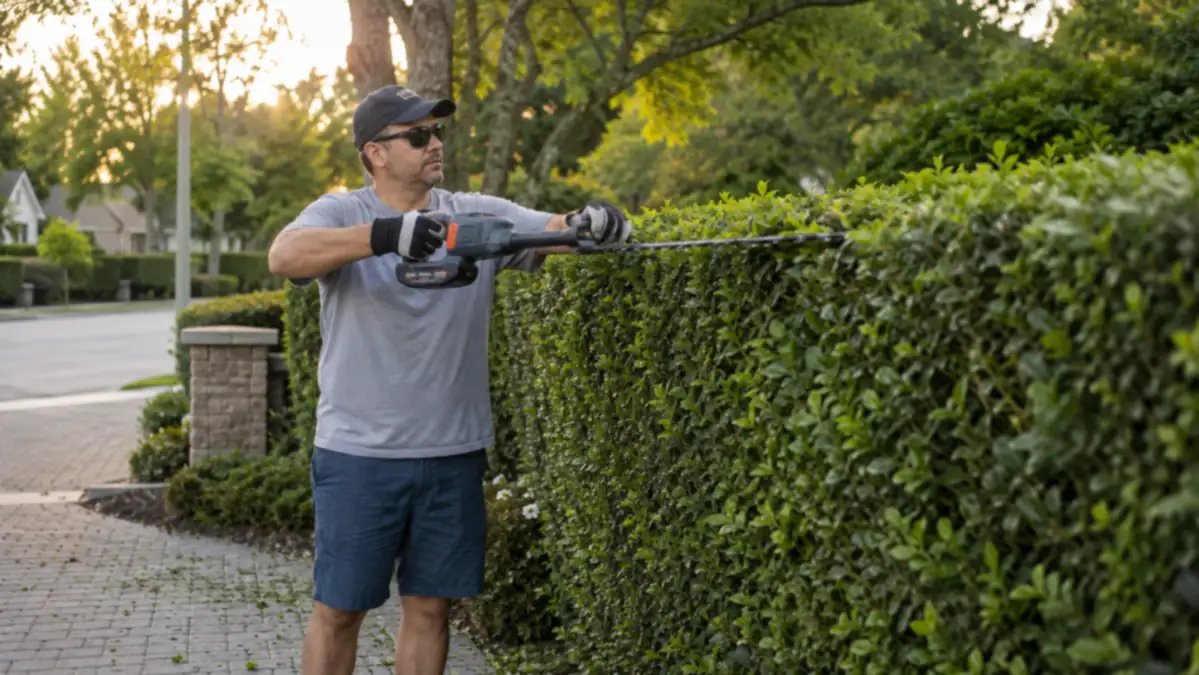
At 5.5 pounds, this is a genuinely lightweight trimmer, and that mattered more to me than I expected going in. I'm 58, and I've got a shoulder that complains after too much overhead work, so a heavy tool held out in front of me for half an hour is a real problem, not a minor inconvenience. The WORX trimmer's weight is low enough that I could work the tops of my boxwood hedges, which sit at about chest height, without my arm shaking by the end of the job the way it used to with a bulkier corded model.
The dual handle design, one at the base and a secondary grip further up the body, made it easy to switch my angle when trimming the vertical sides of the privet hedge versus the flat tops of the boxwoods. I didn't have to twist my wrist awkwardly to keep the blade flat, which is a small thing until you're doing it for the fourth hedge in a row and your wrist is the part that gives out first.
What Else I Considered
Before landing on this trimmer, I looked hard at a gas-powered model a neighbor of mine swears by. Gas trimmers do have more raw cutting power for thick, overgrown hedges, and if you've got a genuinely massive hedge run, that's worth weighing. But I didn't want the noise, the fuel mixing, or the maintenance that comes with a gas engine for a yard my size, and honestly the smell of gas trimmers always gives me a headache after twenty minutes. If you want a closer side-by-side, I put together a full WORX cordless versus gas hedge trimmer comparison that breaks down the tradeoffs in more detail.
I also considered sticking with manual hedge shears, which is what I used for years before my joints started reminding me why cordless tools exist. Manual shears are cheaper up front and never run out of battery, but on a hedge the size of my privet run, they turn a fifteen-minute job into an hour of repetitive squeezing that leaves my hands aching for two days. I wrote up more of that comparison separately if you want the full picture on why I made the switch, in a piece on why a cordless trimmer beats manual shears for most home yards.
Price factored in too, and I'll say plainly that I never look at the sticker number alone. What matters is what a tool costs you in frustration over a season, a dull blade that tears leaves instead of cutting them, a battery that dies halfway through, a motor that bogs down on anything thicker than a twig. The WORX trimmer never gave me that kind of frustration, and that's worth more to me than shaving a few dollars off at checkout. Check today's price on Amazon if you want to see where it lands right now.
Where It Struggled
I want to be honest about the tradeoffs, because no tool is perfect for every yard. The battery runtime is the biggest one. If you've got a large property with long hedge runs, plan on a second battery or a midday recharge, because 25 to 35 minutes per charge isn't going to cover everything in one pass once you're past a modest suburban lot.
The 22-inch blade length is also a tradeoff. It's nimble and easy to control, which I liked for detail work around the base of my hedges and near the walkway, but it means more passes on a long, flat hedge top compared to a longer 24 or 26-inch blade. On my 30-foot privet run, I'm making noticeably more back-and-forth passes than a longer trimmer would need, which adds a few minutes to the job but hasn't been a dealbreaker.
And on genuinely thick, woody growth, branches pushing toward half an inch, I did occasionally have to go back over a spot for a second bite. That's the honest limit of a tool built for regular shaping and maintenance rather than heavy renewal cutback, and it's worth knowing going in rather than being surprised by it on your first overgrown hedge.
What I Liked
- Dual-action blades cut clean with noticeably less vibration than a single-action trimmer
- Lightweight at 5.5 pounds, manageable for overhead and extended trimming sessions
- No cord to manage, real freedom to move around the whole yard in one pass
- Blade resists sap buildup well, stayed sharp and clean across a full season
- Battery and charger included, no separate purchase needed to get started
Where It Falls Short
- Runtime tops out around 30 to 35 minutes per charge, less on bigger jobs
- Battery runtime dropped noticeably by late season after repeated charge cycles
- 22-inch blade means more passes on long hedge runs than a longer blade would need
- Struggles a bit on thick, woody stems approaching half an inch
My hands didn't buzz and tingle the way they used to after twenty minutes, and that's when I knew the dual-action blades were worth the switch.
Who This Is For
If you've got a suburban-sized yard with boxwood, privet, or similarly fine-branched hedges that need regular shaping every few weeks through the growing season, this trimmer earns its spot in your shed. It's especially good if you've dealt with shoulder or wrist fatigue from a heavier corded or gas trimmer, because the light weight and low vibration genuinely make a difference over a full trimming session. Anyone tired of managing an extension cord around flower beds and walkways will notice the freedom immediately.
It's also a solid fit if you're doing your own hedge maintenance rather than hiring it out, and you want a tool that doesn't need gas, oil mixing, or a pull cord to get started. Squeeze the trigger and it's cutting, which matters on a Saturday morning when you just want to get the job done before it gets hot.
Who Should Skip It
If you've got a large property with long, dense hedge runs, several hundred feet or more, the battery runtime is going to fight you, and you'd be better served by a gas trimmer or a cordless model with a swappable battery system built for bigger jobs. And if your hedges are seriously overgrown with thick, woody branches that need hard renewal cutback rather than regular shaping, you'll want loppers or a saw to knock the thick growth down first, this trimmer isn't built for that kind of heavy work.
If you're only maintaining a couple of small potted shrubs or light foundation plantings, you may not need a tool this capable at all, hand shears would probably serve you just as well with less to store and charge.
One season in and my hedges finally look like someone actually tends them.
If your boxwoods or privet are getting away from you, don't spend another weekend fighting a dull blade or a tangled cord. See today's price on the WORX 22-inch cordless hedge trimmer on Amazon.
Amazon Check Today's Price on Amazon →