

Short version: if your hedges live in a normal suburban yard, the WORX cordless hedge trimmer is the one I'd tell you to buy. I've used both a cordless model and a gas trimmer a neighbor loaned me for most of a season, and the gas one only wins if you're clearing acreage or you genuinely enjoy fussing with small engines on a Saturday morning. Most of us don't, and most of us don't need to.
I'll go through the real differences below, not the spec-sheet version you get standing in the aisle at the hardware store. Weight, noise, how long it actually takes to get cutting once you decide you want to trim something, how the cut itself looks when you're done, and what it costs you in upkeep over a few seasons, because that last part is where people get surprised.
| Spec | WORX Cordless Hedge Trimmer | Typical Gas Hedge Trimmer |
|---|---|---|
| Weight | 5.5 lbs | 9 to 11 lbs |
| Startup | Squeeze the trigger, cutting in under 2 seconds | Choke, prime, pull cord, sometimes 3 or 4 times |
| Noise while running | Quiet enough to talk over | Loud enough that neighbors notice at 8am |
| Fuel/power source | Rechargeable battery, included in the box | Mixed gas and oil, bought separately |
| Fumes | None | Yes, especially in enclosed side yards |
| Maintenance | Wipe blades, charge battery | Carburetor cleaning, spark plug, fuel stabilizer |
| Blade length | 22 inches, dual-action | Usually 22 to 26 inches, single or dual-action |
| Runtime on one charge/tank | About 40 minutes per charge | 20 to 30 minutes per tank, refuel and go again |
| Best for | Standard home hedges, borders, foundation shrubs | Large properties, thick overgrown commercial hedgerows |
Where the WORX Cordless Wins
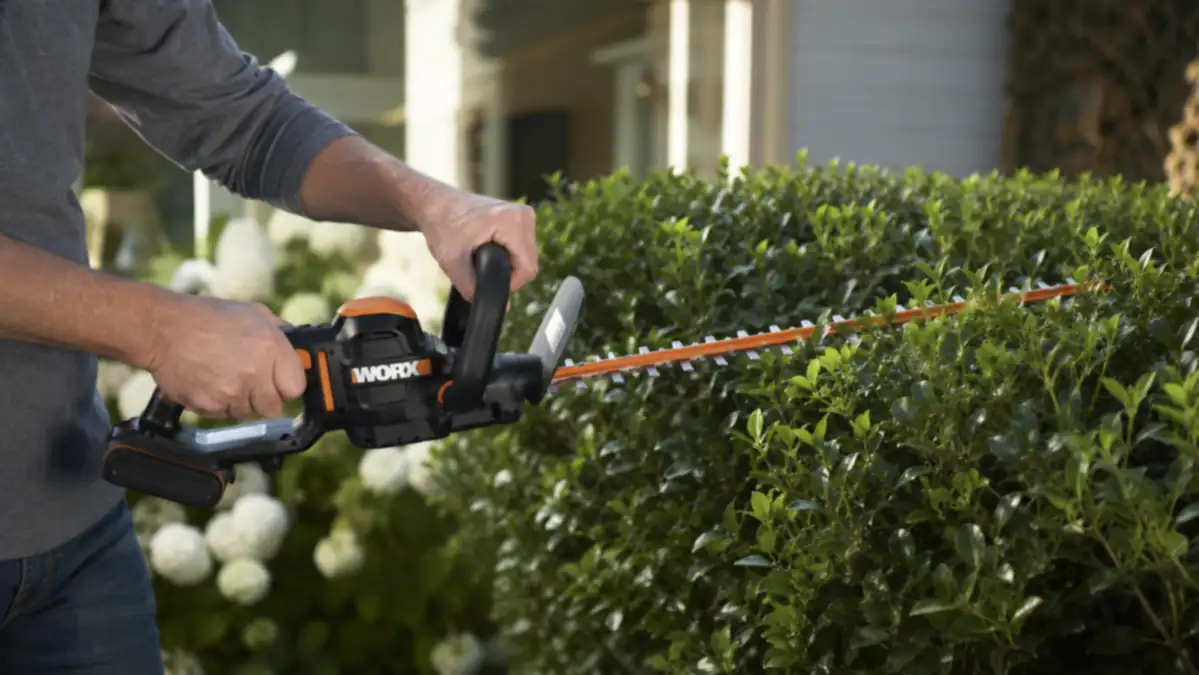
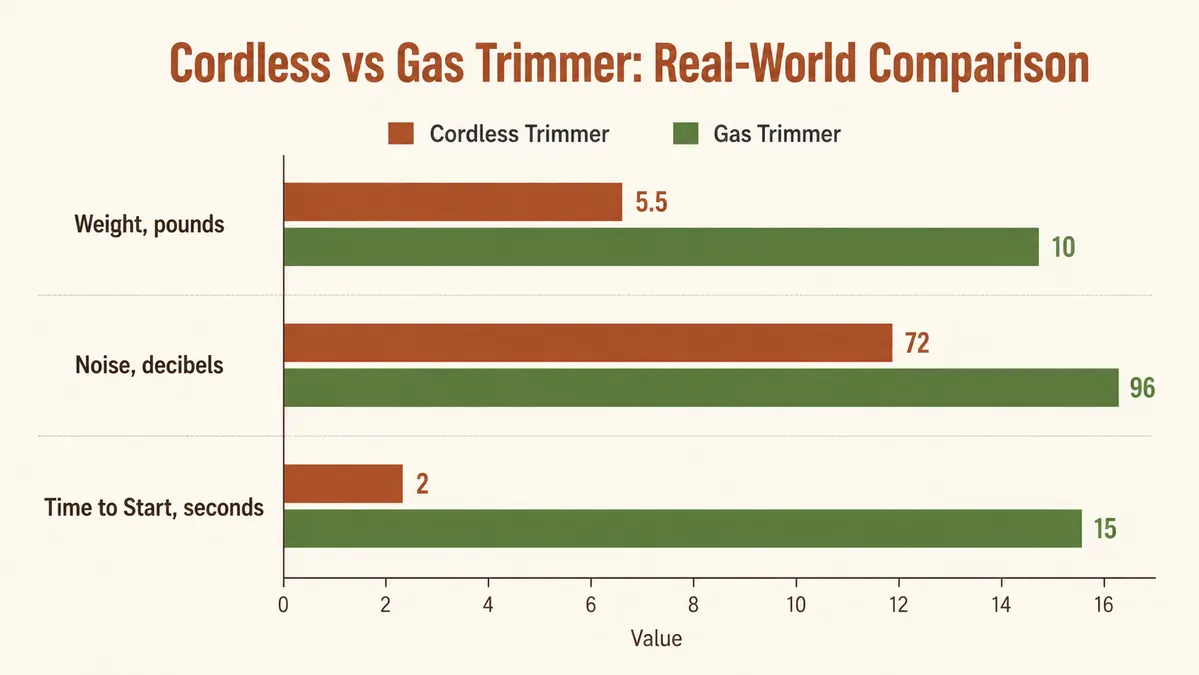
The weight is the thing you feel first, before you've cut a single branch. At 5.5 pounds, I can hold the WORX trimmer up at shoulder height along the top of my privet hedge for a full pass without my arm shaking by the end of it. The gas trimmer I borrowed was closer to 10 pounds once you add the fuel tank, and that difference is not small when you're reaching over a hedge that's chest height or taller, or standing on a step stool to level the top of a taller row.
My forearms knew the difference by the second hedge. With the gas trimmer, I had to switch arms partway through the privet just to keep going, and I still felt it in my shoulders the next morning. With the WORX I go start to finish, both the front boxwoods and the side border, without needing a break in the middle.
Startup is the other place it's not close. With the WORX, I squeeze the trigger and I'm cutting. With the gas trimmer, there was a whole routine every single time: choke on, prime bulb, pull cord, pull it again, adjust the choke, pull it a third time. On a cool morning it sometimes took five pulls before it caught, and my arm was tired from pulling before I'd trimmed anything at all. That's five or ten minutes of my Saturday gone before I've touched a branch, and some mornings it just didn't start at all, which meant a trip to check the spark plug instead of trimming anything.
Skip the pull cord entirely
The WORX cordless hedge trimmer starts with a trigger squeeze, not a prayer and a pull cord. Check today's price on Amazon and see the current rating for yourself.
Amazon Check Today's Price on Amazon →Noise matters more than I expected before I owned a cordless trimmer. The gas model was loud enough that I'd get a look from my neighbor on the other side of the fence if I ran it before nine on a Saturday. The WORX is quiet enough that I can hear the radio from my kitchen window while I'm using it, and I don't feel like I'm announcing yard work to the whole block. My wife can be on a phone call inside with the window cracked and not even notice I'm out there.
Where a Gas Trimmer Wins
I want to be straight about this instead of pretending the cordless option is perfect for everyone, because it isn't. If you've got a long, established hedgerow, the kind that runs the length of a property line and has gone a season or two without a trim, a gas trimmer with more sustained power and often a longer blade will chew through thick, woody growth faster than a battery model will. Battery trimmers, including the WORX, do best on regular maintenance trims of green growth, not once-a-year assaults on overgrown wood as thick as your thumb.
Runtime is the other honest tradeoff, and I'd feel dishonest not mentioning it. A full charge on the WORX gets me around 40 minutes of actual trimming, which has covered every hedge job I've had in my own yard, boxwoods along the front bed and a privet hedge that runs about 30 feet, with time to spare. But if you're doing multiple long hedgerows in one session, a gas trimmer lets you just refuel from a can and keep going instead of waiting on a charger to top off. For a landscaper doing five properties in a day, that matters quite a bit. For someone doing their own yard on a weekend, it rarely does, because you finish before the battery even gets close to empty.
I bought the gas trimmer's mixed fuel once, used about a third of the can, and the rest sat in my garage for over a year until I finally tossed it out. That's when I switched for good.
What the Cut Itself Actually Looks Like
This is the part people forget to compare. Both trimmers left a clean line on green growth, boxwood especially takes well to either one. But on the gas trimmer, the extra vibration in the handle made it harder for me to hold a perfectly straight line across a long run, and I ended up going back over a couple of spots to even them out. The WORX has less vibration coming through the handle, which for me translated into a straighter, more even top on the first pass. My privet hedge has never looked as consistent as it does now that I trim it with the lighter tool I can actually hold steady.
On thicker, older wood, the gas trimmer did have an edge in a single pass, snapping through branches the WORX had to work at a little more. But for the green, leafy growth that makes up most of a normal trim three or four times a season, I never felt like I was missing power with the cordless model.
The Upkeep Nobody Mentions at the Store
This is the part that swayed me more than the weight or the noise, honestly. A gas trimmer needs fresh fuel mixed at the right ratio, a fuel stabilizer if it's going to sit over winter, occasional spark plug checks, and if you let old gas sit in the tank too long, a carburetor cleaning that can run you a real repair bill. I let mine sit one winter without draining the tank properly and it wouldn't start the following spring no matter how many times I pulled that cord. A shop wanted more to fix it than I'd have paid for a decent cordless trimmer outright, which felt like a bad trade for a tool I only use a handful of weekends a year.
The WORX just needs the battery charged and the blades wiped down with a little oil now and then. There's no fuel to go stale, no carburetor to gum up, no spark plug to replace, and nothing sitting in my garage that I have to think about disposing of properly. Over three or four seasons, that difference in upkeep, both in time spent and money spent, adds up to more than most people account for when they're standing in the store comparing sticker prices side by side.
There's also the simple matter of storage. A gas trimmer with fuel in the tank isn't something you want sitting next to the water heater or in a closed shed all summer. The WORX just hangs on a hook in the garage with the charger nearby, and I don't think twice about where it lives, or about a grandkid getting into a fuel can while it's out.
Where WORX Falls Short
I'm not going to tell you the cordless trimmer has no downsides, because it does, and I'd rather you hear it from me than find out the hard way. The battery runtime means you're planning your session around a charge, not just grabbing the tool and going for as long as you want. On a very large yard with several long hedges, you might need to pause and recharge partway through, and if you forget to charge it the night before, you're stuck waiting instead of trimming.
It also won't power through the same thickness of overgrown wood a gas trimmer will without bogging down a little, especially on branches thicker than a pencil that have gone untrimmed for a year or more. For a typical home hedge that gets trimmed a few times a season, none of that has been a real problem for me. For someone managing a genuinely large property or catching up on years of neglect in one go, it's worth knowing going in so you're not disappointed.
Who Should Buy the Cordless
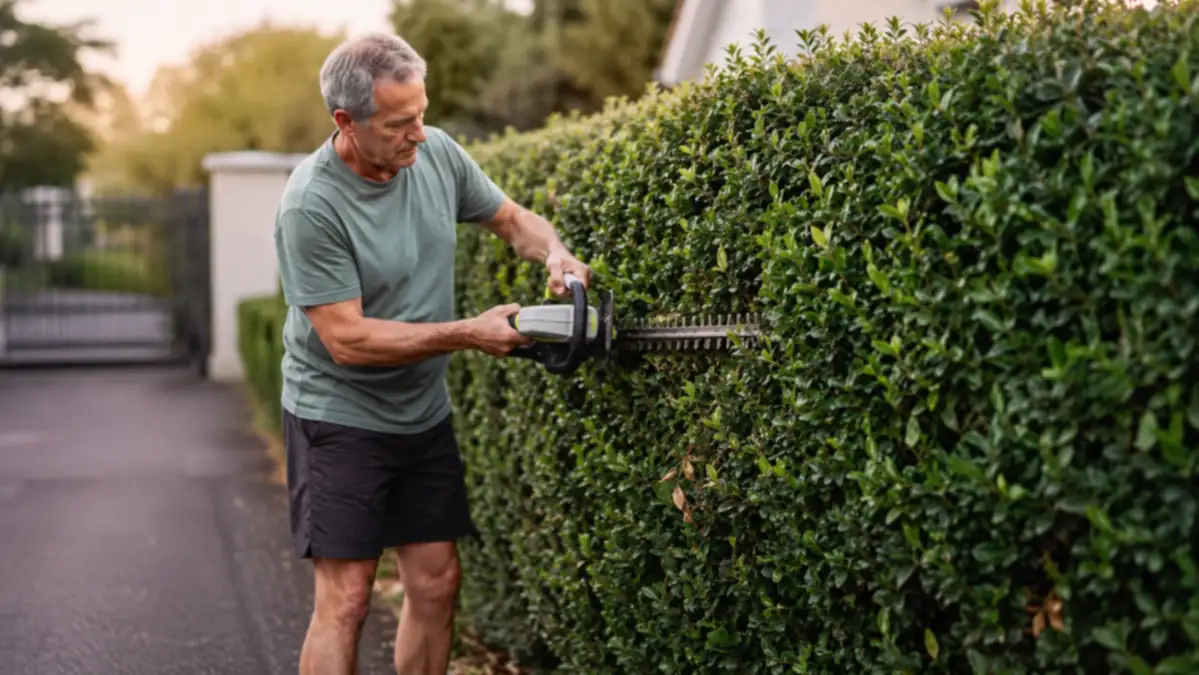
If your yard looks like most suburban yards, a foundation hedge, a border along the fence line, maybe a couple of shrubs you keep shaped, the WORX cordless trimmer is the practical choice. You'll trim more often because starting it is easy, which actually keeps your hedges looking better year round instead of getting away from you between big gas-powered sessions you keep putting off. For step-by-step technique once you have it, my honest review covers the two things I wish I'd known before I bought mine. It's also the one I'd hand to a spouse or a teenager without worrying about them getting hurt figuring out a choke and a pull cord, since there's really only one way to use it.
Who Should Buy Gas
If you're maintaining a large property with long, thick hedgerows, or you do trimming for other people as side work, the extra cutting power and unlimited runtime of a gas trimmer earns its keep. Just budget for the fuel, the maintenance, and the noise complaints from the neighbors, because those are real ongoing costs too, not just a one-time purchase price you pay once and forget about. I've talked to a couple of guys who mow and trim for other households on the side, and they all say the same thing: gas is worth the hassle when you're on someone else's clock and need to move fast between four or five yards in a single afternoon. That math just doesn't apply to one homeowner trimming their own hedges every couple of weeks.
For a normal home yard, this is the easier choice
Lighter, quieter, and no fuel to mix or stale out over winter. See the current price and rating on the WORX cordless hedge trimmer on Amazon.
Amazon Check Today's Price on Amazon →