
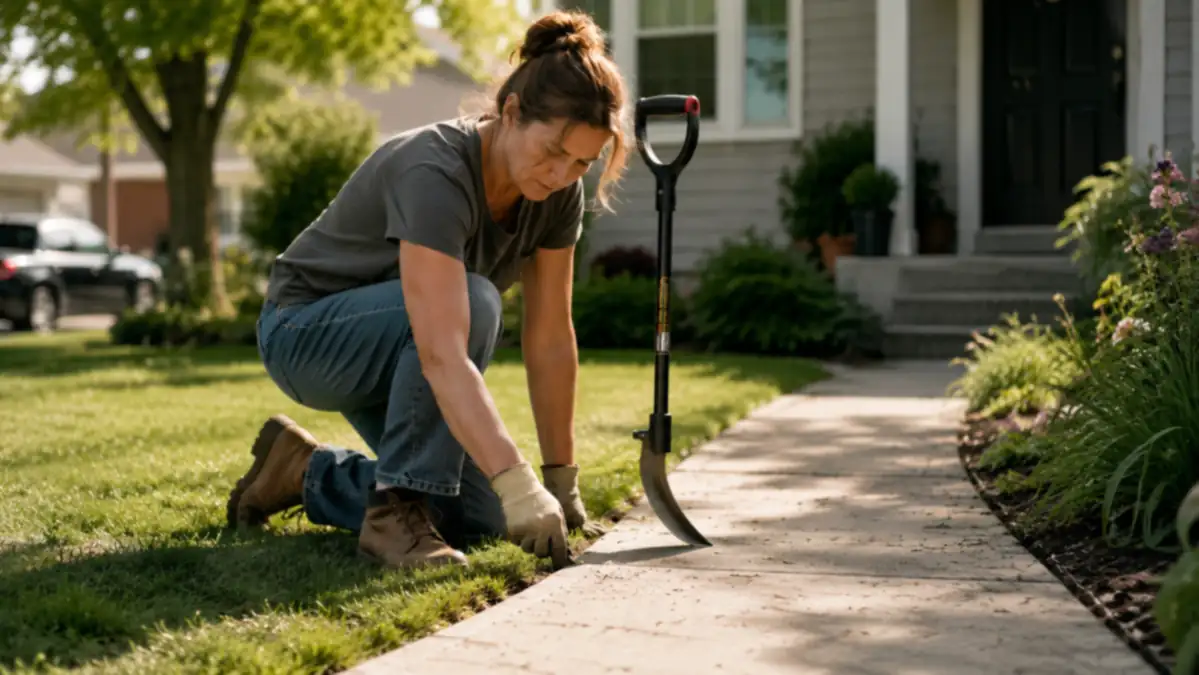
For three seasons I tried to fake a clean edge along my front walkway by tipping my string trimmer on its side and dragging it down the grass line. It sort of worked from ten feet away. Up close it looked like a dog had been at it, wavy in spots, chewed short in others, and never actually cutting the sod, just shredding the tops of the grass blades. What finally gave me the line I wanted was a plain manual half-moon edger, the kind you step on and rock forward one bite at a time. No motor, no cord, no battery. Here are ten specific reasons that simple tool beat a string trimmer at the one job I actually needed done.
This isn't a lab test. It's what I noticed edging about ninety feet of walkway and bed border around my own yard with the CKLT 41 inch border edger, plus a Saturday spent helping my neighbor redo his front border after his string trimmer left it looking rougher than when he started.
Tired of a wavy line that looks worse the closer you get?
A manual edger cuts an actual groove instead of just shredding grass tips. Check today's price on the CKLT half-moon edger before your next edging job turns into another disappointing weekend.
Amazon Check Today's Price on Amazon →It cuts a real groove instead of just trimming grass tops
A string trimmer held on its side rips the tops off grass blades near the edge, but it doesn't actually sever the sod from the bed line underneath. A manual edger drives a flat steel blade straight down through the turf and roots, creating an actual cut line you can see and feel with your foot. That groove is what keeps grass from creeping back into the bed a week later, something a trimmer never manages no matter how many passes you make.
You control the depth with your own body weight
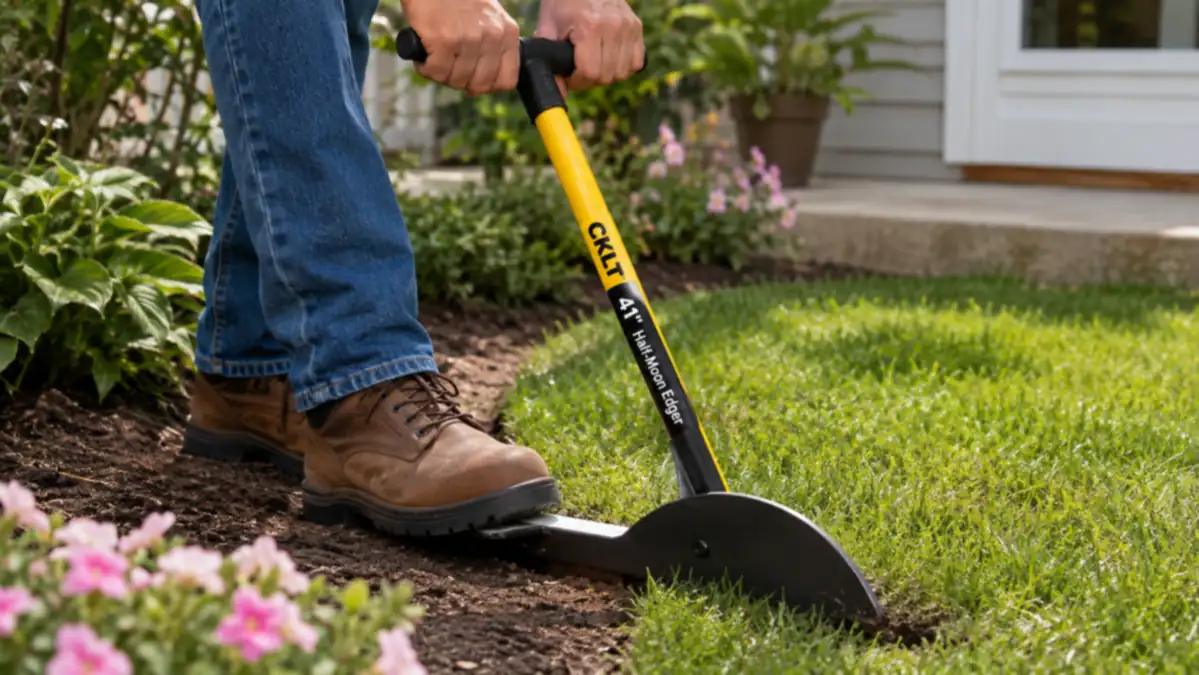
With a string trimmer you're at the mercy of the cutting line's angle and whatever bounce the head has that day. With a half-moon edger, you step onto the wide footplate and the blade goes exactly as deep as you push it. I can go shallow along a curved bed where the roots are thin, or lean in harder along the walkway where the grass has been thick and stubborn for twenty seasons. That kind of control just isn't there with a spinning line.
Amazon Check today's price on an edger you control with your foot →
The curved blade naturally tracks a straight line
The half-moon shape isn't just for looks. Once the blade is in the ground, its curved edge wants to travel forward in a straight path rather than wander side to side the way a loose trimmer head does. I set the first cut with a string line pulled taut along the walkway, and after that the CKLT basically follows its own track. A trimmer has no such guide, so every pass is a fresh guess.
No cord line to burn out or snap mid-job
I used to keep a spare spool of trimmer line in my back pocket because the edge work always chewed through it faster than mowing did. Cutting against dirt and rock along a bed line wears trimmer line down in minutes, and when it snaps you're stopping to rethread it. A steel edger blade doesn't wear down mid-job or need a spare anything. You start the border and you finish it.
The wide footplate spreads the work across your whole boot, not your grip
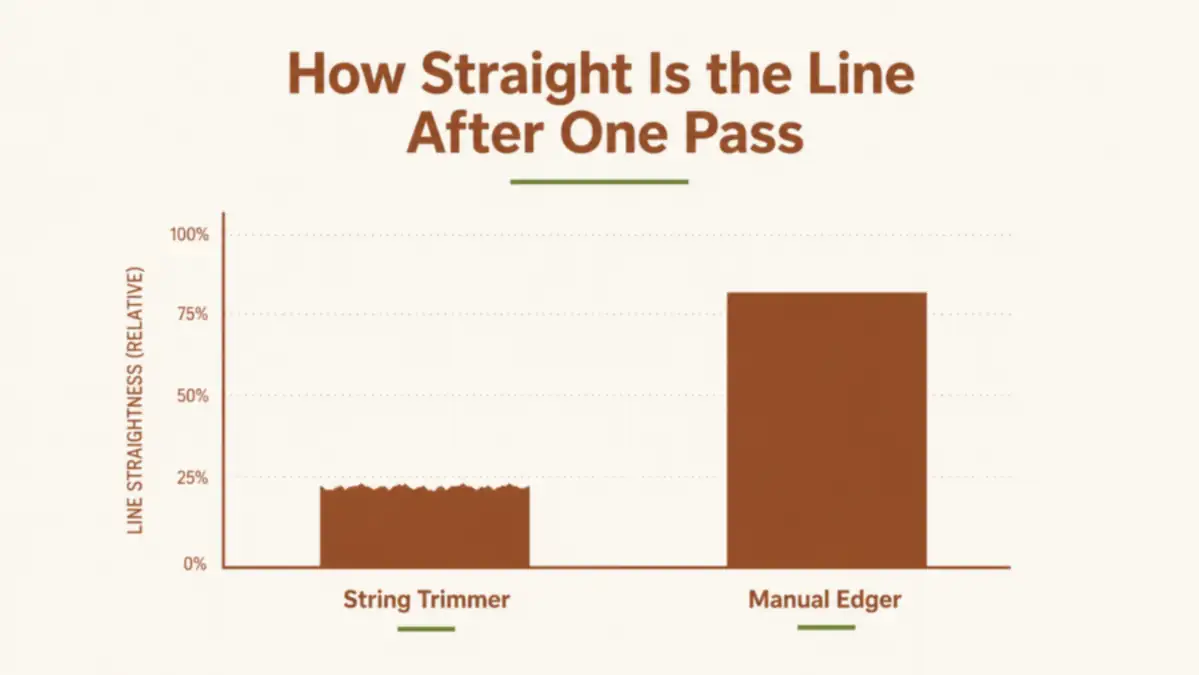
Holding a trimmer sideways for an hour puts all the strain in your forearms and wrists, and mine used to ache for two days after edging the whole front border. The CKLT shifts most of the work to your leg, since you're stepping down onto a wide plate rather than muscling a spinning head through grass. My arms mostly just guide and rock the handle. That's an easier trade for a 61 year old back and shoulders than a full afternoon of trimmer vibration.
It doesn't fling grass clippings and dirt onto the walkway
A string trimmer at edging angle sprays clipped grass and grit sideways in a fine cloud, which usually means half of it lands right back on the walkway you were trying to clean up. The half-moon blade just slices and drops the sod strip in place, no flinging, no cloud of debris. I sweep less afterward and I'm not picking bits of grass out of my shoes for the rest of the day.
Amazon Check today's price on cleaner edging with less mess →
The line holds its shape longer between edging jobs
Because the manual edger actually severs the root line instead of just chewing the surface, the border stays crisp for weeks longer than anything I ever got from the trimmer. Grass has to regrow across an actual cut groove before it creeps back into the bed, and that takes real time. With the trimmer method, the ragged edge was already fuzzy again within a week, since I'd never really cut it clean in the first place.
You can feel exactly where the blade is going through the handle
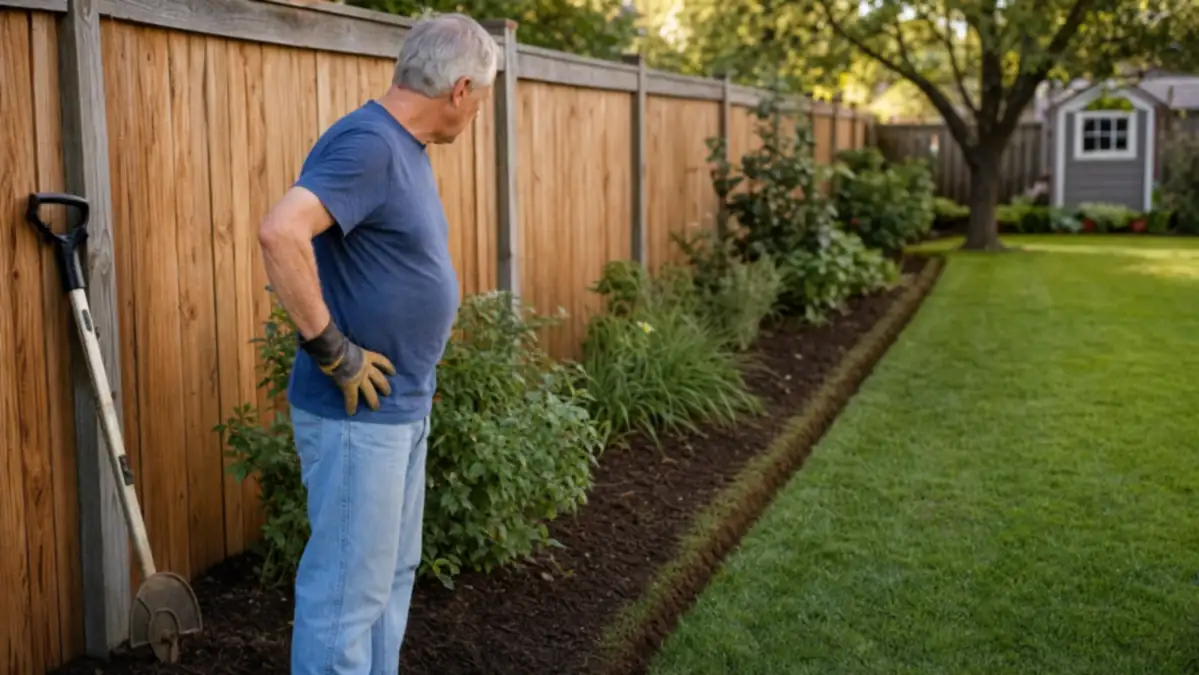
The long rubber handle transmits everything happening at the blade straight up to your hands, so you know instantly when you've hit a root, a buried rock, or a sprinkler line. A spinning trimmer head just bounces off or grinds through obstacles without much warning. That direct feedback has saved me from nicking a shallow irrigation line twice, once I felt the blade catch and stopped before pushing further.
Amazon Check today's price on a tool you can actually feel →
Curved beds are easier to shape by hand than with a spinning head
My border around the raised beds isn't a straight line, it curves twice before it reaches the fence. Steering a string trimmer around a curve while holding it sideways is awkward and the results show it. With the half-moon edger I can rock the blade forward in short overlapping bites and follow the curve almost like tracing it with a pencil, since each bite is a deliberate placement rather than a moving spinning line.
There's nothing to charge, fuel, or maintain between seasons
No battery to keep topped off over winter, no gas to drain before storage, no trimmer line to restock every spring. I hang the CKLT on a nail in the shed in November and it's ready to go again in March without a single step of prep. For a tool I only reach for a handful of times a season, that kind of zero-maintenance simplicity matters more to me than it might for someone edging every single week.
Amazon Check today's price on a tool with nothing to maintain →
What I'd Skip
I want to be straight with you here, because this is the lowest rated tool I cover on this site and there's a real reason for that. A manual edger asks for actual physical effort. On soft soil along my border beds it's an easy, satisfying job. On the compacted clay strip next to my driveway, where the ground gets baked hard by August, stepping the blade in takes real weight and a few extra stomps, and after a long stretch of it my knee lets me know about it the next morning. If you've got a lot of hard-packed ground to edge, or a bad back or knees that won't tolerate repeated stepping, an electric edger will get there with less of your own effort involved, and I cover that tradeoff in my step-by-step edging guide. This also isn't a tool for edging a huge property in one sitting. For my own yard, done in sections over a season, it's the right amount of work. For a much bigger lot, I'd think hard before committing to doing it all by hand.
A string trimmer shreds the grass tops and calls it an edge. A manual edger cuts underneath and actually means it.
Ready to stop faking a straight line with a trimmer?
If your border still looks ragged no matter how careful you are with the trimmer, check the current price on the CKLT half-moon edger on Amazon and see what an actual cut edge looks like.
Amazon Check Today's Price on Amazon →