
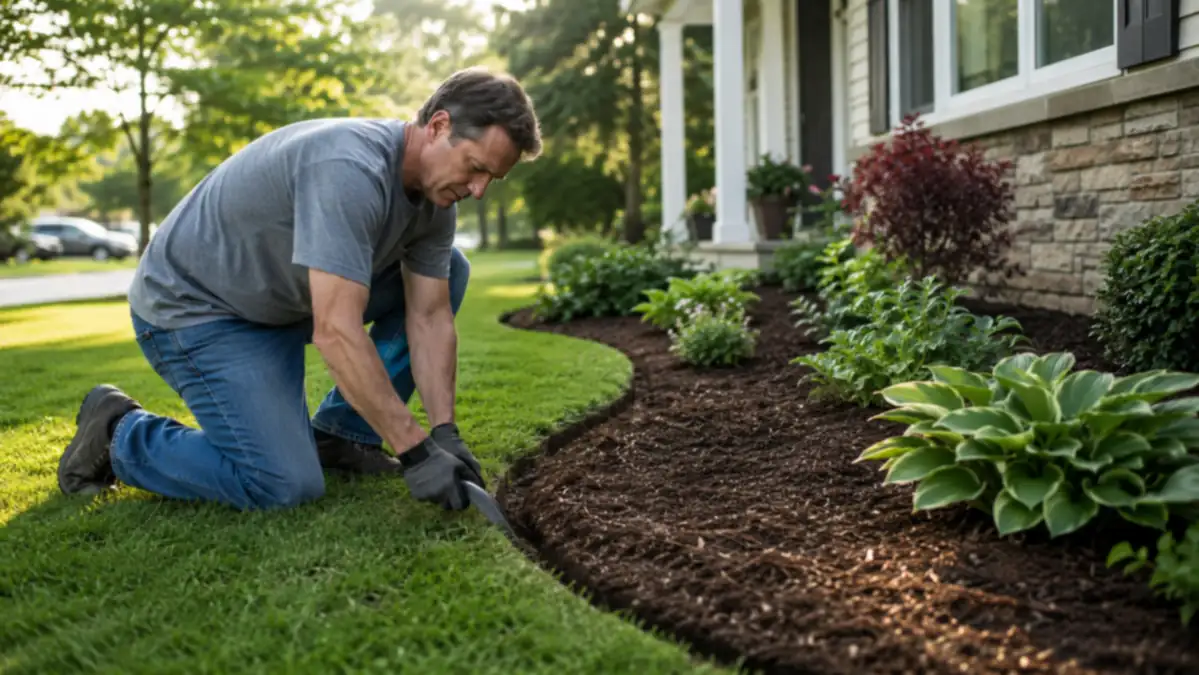
The bed that runs along the front of my house, the one with the hostas and the two hydrangeas my wife picked out, has a long gentle curve to it. Or it's supposed to. For about six years that curve had gone soft at the edges, grass creeping into the mulch on one side and mulch drifting into the grass on the other, until from the sidewalk the whole thing looked less like a curve and more like a shape nobody drew on purpose. A CKLT border edger finally put it right, six years later than it should have.
I'd been managing it with a string trimmer held sideways, which is what I suspect most of us do. What that bed actually needed was a proper half-moon edger, though it took me an embarrassing number of summers to work that out. The trimmer knocks the grass down for a week or two, then it grows right back over the same fuzzy line, and you're out there again doing the same half job. I never once got a curve out of that method that looked like it was cut on purpose. It looked mowed, not edged, and there's a real difference once you've seen it done right.
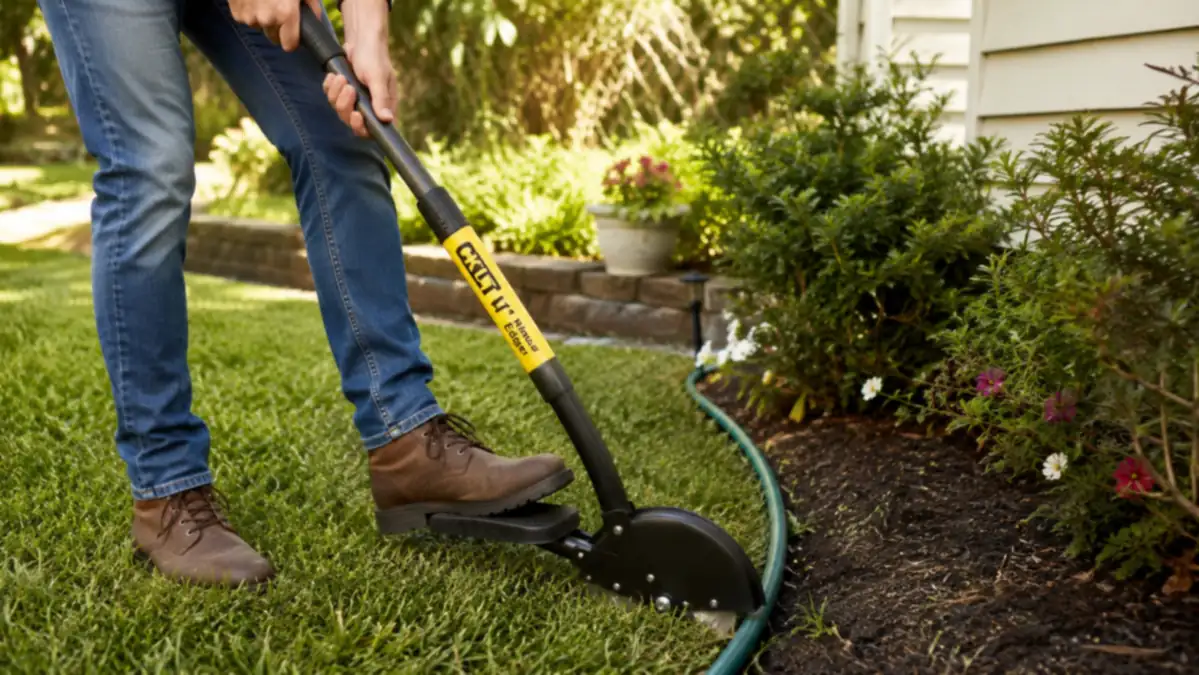
What finally pushed me to do it properly was a neighbor two doors down having his whole front bed line redone by a landscaping crew. I watched them work for maybe twenty minutes on a Saturday. No machines, no smoke, just two guys with what looked like heavy steel half-moons, stepping the blade down the curve one bite at a time. I went inside and ordered the same style of manual edger that afternoon, a CKLT with the long rubber handle and the wide footplate, figuring if two professionals could do a whole yard's worth of beds with hand tools, I could manage one curve in front of my own porch.
It arrived a few days later and I picked a Saturday morning when the ground was still damp from rain the night before, soft enough to make the cut easier without turning to mud. Before touching the blade to anything, I laid a garden hose along the bed and shaped it into the curve I actually wanted, nudging it a few inches at a time until it looked right from the steps, the driveway, and the mailbox. That took nearly fifteen minutes, but it meant I only had to commit to the cut once.
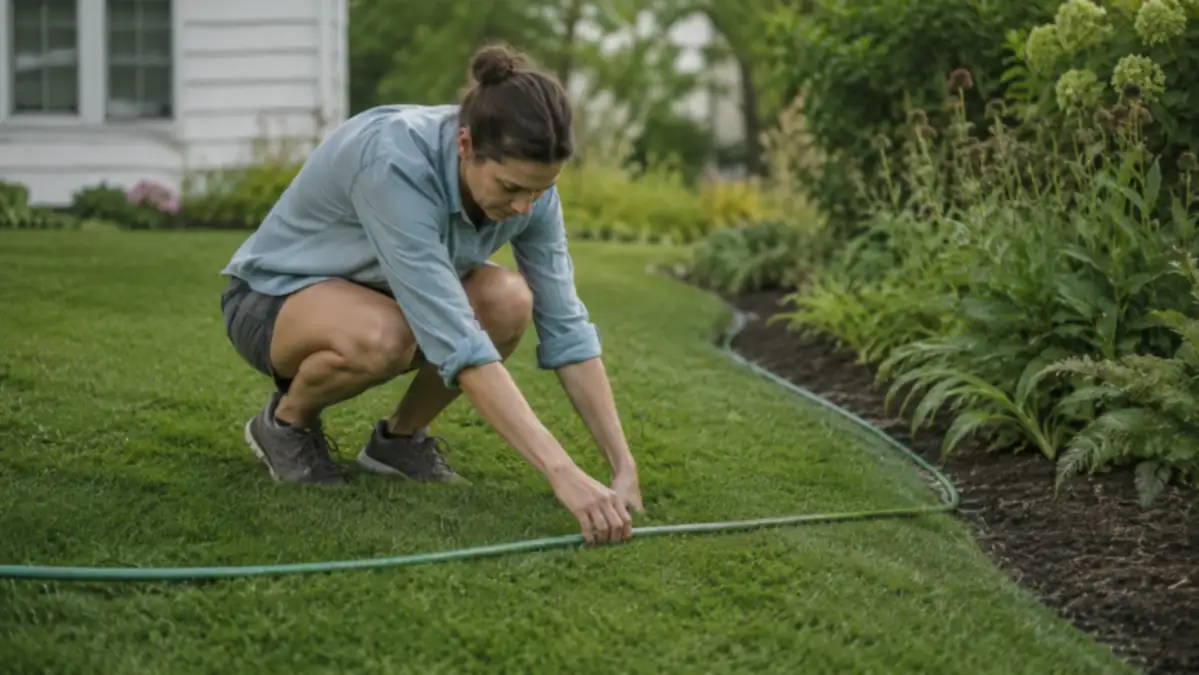
Then I just followed the hose. Boot on the CKLT's footplate, blade straight down against the rubber, rock it back, pull the wedge of turf toward the bed, step six inches down the line, repeat. My hands were sore by the end of the first thirty feet, more from the unfamiliar grip than anything wrong with the handle, but by the second stretch I'd found a rhythm that didn't fight me. The blade went through that damp turf clean, no sawing, no bouncing off like the flat spade I tried on a stump years ago.
My neighbor Carl stopped his truck at the curb, rolled the window down, and asked who I'd hired to do my beds. I told him it was just me and a hand tool, and he didn't believe me until I showed him the blisters.
A garden hose and one afternoon is all it takes to get a curve like that
You don't need a landscaping crew or a gas-powered edger to get a clean, professional-looking line. Check today's price on the CKLT manual edger and see the reviews for yourself.
Amazon Check Today's Price on Amazon →It took about two hours to work the full curve, roughly thirty five feet from the driveway to the porch steps. That's slower than a crew would manage, but I wasn't racing anyone. What surprised me most wasn't the speed, it was how straight my curve came out compared to six years of trimmer guesswork. Following a fixed hose line instead of eyeballing it with a spinning string meant every foot of that edge matched the foot before it.
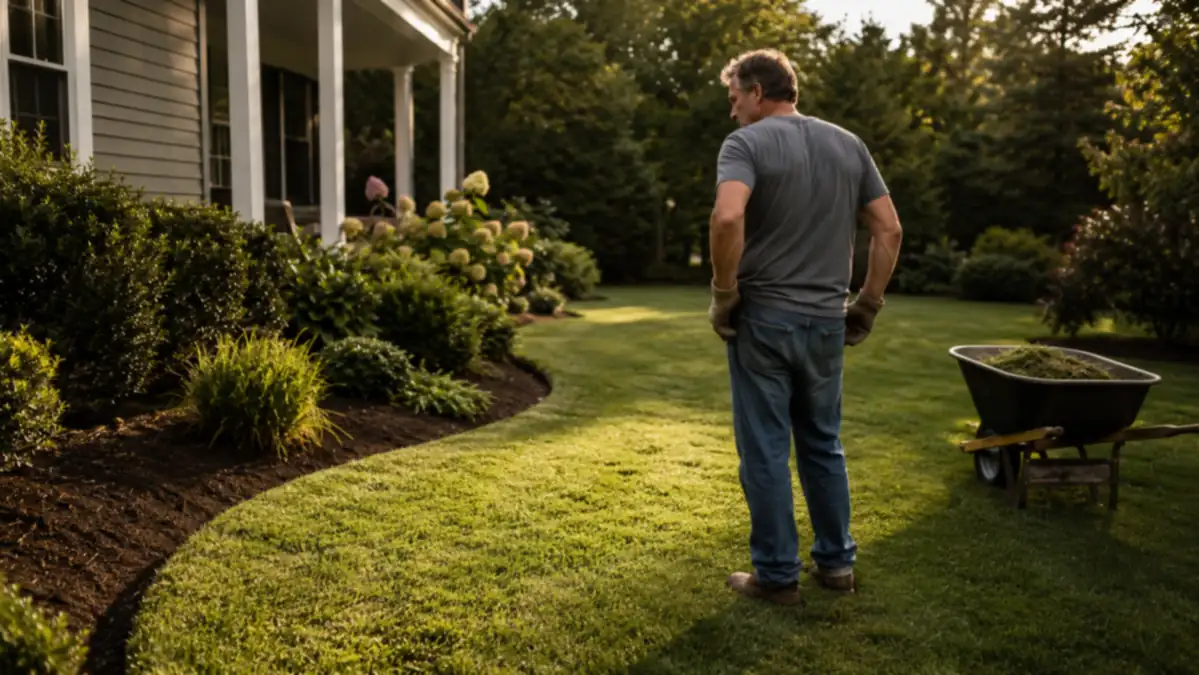
I raked the loose turf and soil into the wheelbarrow, tamped down the new edge with the flat of the blade to firm up the lip, and stood back from the sidewalk to look at it the way I imagine my neighbor's landscaping crew stood back from theirs. It looked, and I don't say this lightly after two decades of doing my own yard work, professionally done. Not perfect. There's one spot near the second hydrangea where the curve kicks a little sharper than I planned, but from the street you'd never notice.
The upkeep since then has been easy, mostly because the hard edge is already cut. Every few weeks I take the CKLT back over the same line for a quick pass, maybe ten minutes total, just enough to keep the grass from creeping back over the lip. I follow the same steps I wrote up in this walkthrough on cutting clean edges for anyone who wants the process laid out step by step. I wipe the blade down and hang it in the garage, and that's the whole routine.
What I didn't expect was how much one curved bed line would change how the rest of the yard reads from the street. The lawn itself hasn't changed. The mulch hasn't changed. But a crisp, deliberate edge does something to the eye, it tells people the whole yard is looked after even on the weeks I haven't gotten to everything else.
What I'd Tell You If We Were Sitting at My Kitchen Table
If you've got a bed line that's gone soft and shapeless the way mine had, you don't need to call anyone or rent anything with a motor. Grab a garden hose, shape the curve you actually want, and spend a Saturday morning stepping a half-moon blade along it. Wear gloves the first time, your hands will thank you, and don't expect the whole thing to go fast. It's slower than a trimmer and a lot more satisfying, because when you're done, the line is yours, cut on purpose, not just knocked down for a week. That's the part nobody tells you going in, and it's the part that stuck with me longest.
Ready to trade fuzzy trimmer lines for a curve you actually planned
Grab a hose, pick your line, and let the CKLT manual edger do the cutting. Check the current price on Amazon and see if it's the right fit for your beds.
Amazon Check Today's Price on Amazon →