
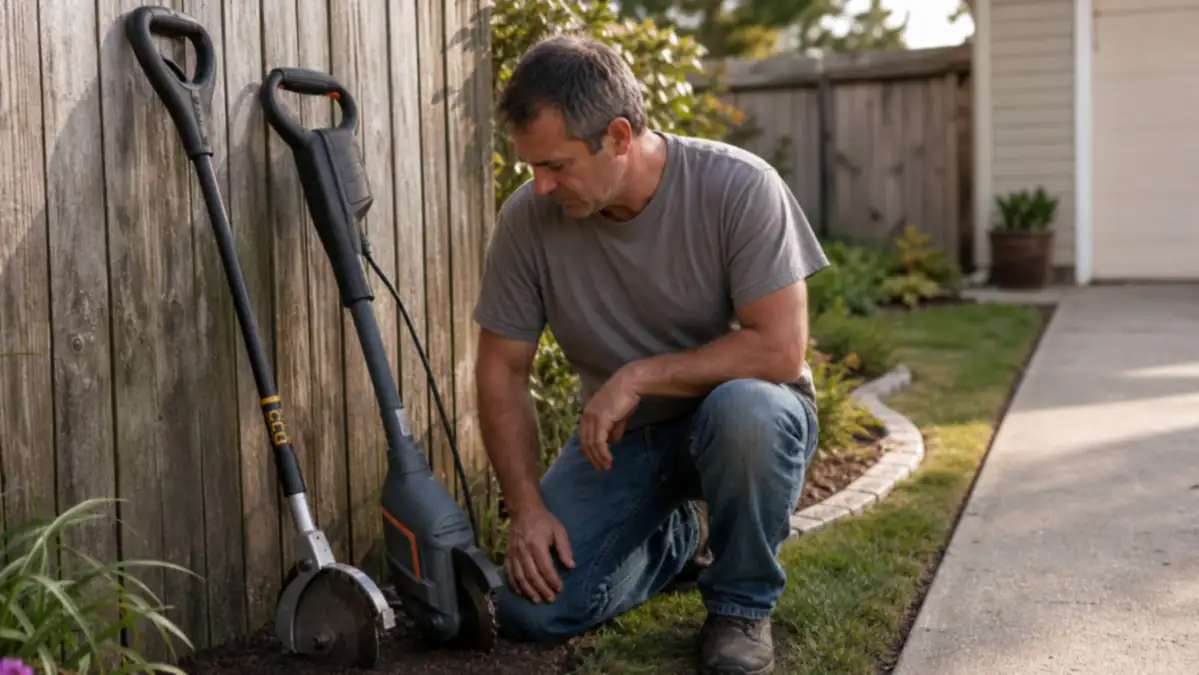
Short answer: if your yard looks anything like mine, a modest suburban lot with a long border along the fence, four raised beds, and too much lawn to justify buying every power tool that exists, the CKLT half-moon edger is the one that stays by the back door. It costs less than a single tank of gas for the mower, needs no cord, no battery, no charging, and it cuts a cleaner line around curves and tree rings than any electric edger I've tried. That's not the whole story though, because a corded electric edger genuinely beats it in a few real ways.
I want to be upfront about this comparison before we get into it. I'm not trying to talk you out of an electric edger, because for the right yard it's the better tool, full stop. My neighbor Gary runs a corded electric edger along his driveway and the length of his front walk, and for that specific job, a long, mostly straight run of concrete edge, it beats my manual edger without much argument. What I can tell you after twenty seasons gardening and one full season deliberately alternating between his electric edger and my CKLT is exactly which jobs go to which tool, and why I still haven't bought a power edger of my own.
How I Tested Both Edgers
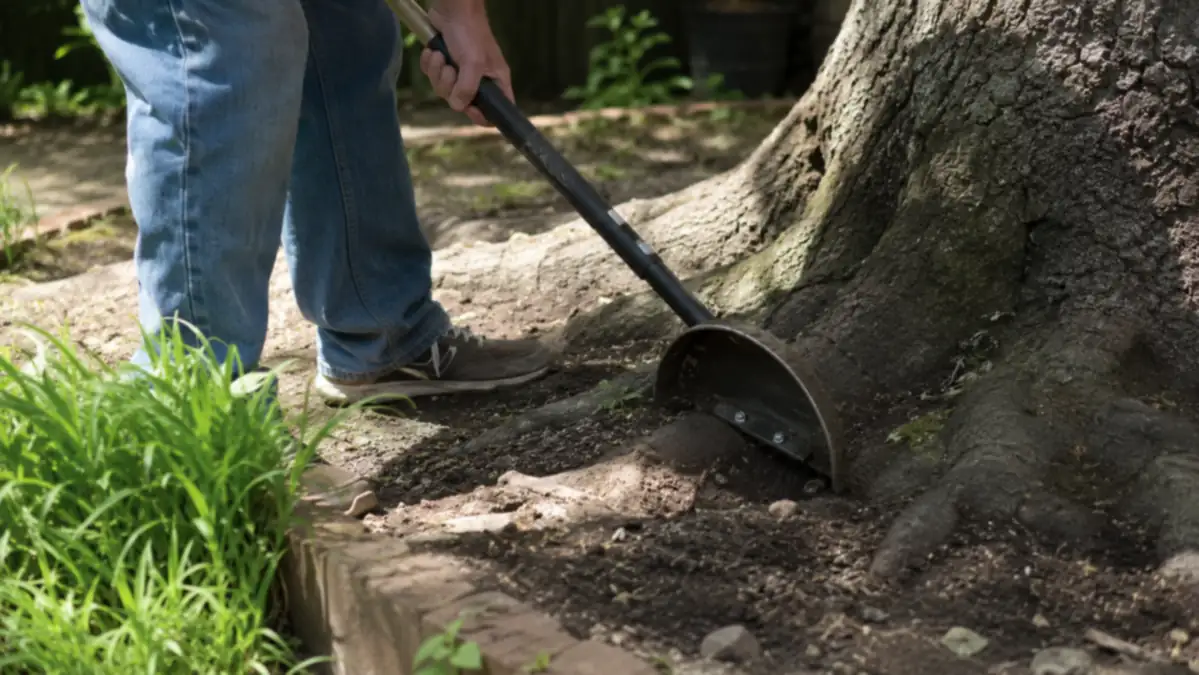
Gary was kind enough to let me borrow his electric edger for most of a season while I kept using my CKLT on the same yard, sometimes the same afternoon. I edged my back border with the CKLT one week and the electric edger the next, paid attention to how long each one took, and noticed how my shoulders and lower back felt afterward, since twenty years of gardening has left my back with strong opinions about that kind of thing. I also ran both along a stretch of my driveway apron, the closest thing my yard has to Gary's long straight walkway, and around the base of the oak tree in my front yard, which has roots that push up through the soil in a way that makes any edger's job harder.
I didn't do this scientifically with a stopwatch and a clipboard, I'm not that kind of gardener. But I paid close enough attention over a full season, spring cleanup through the last edge before frost, that I trust what follows. The differences weren't subtle once I'd used both tools on the same ground more than a few times, and some of what I expected going in turned out to be wrong once I actually compared them side by side instead of guessing.
| Spec | CKLT Manual Border Edger | Corded Electric Edger |
|---|---|---|
| Upfront cost | Check today's price, a fraction of a decent electric edger with nothing else to buy | Motor and cord add real cost, plus an extension cord long enough to reach the back yard |
| Cord or battery required | None. Works anywhere, any time, no charging or cord management | Needs a nearby outlet and an extension cord, or a battery pack that has to be charged ahead of time |
| Physical effort over a full yard | Body weight through the blade with every step, real work on a long run | Motor does the cutting, you just guide it along the line |
| Speed on a long straight edge (driveway, sidewalk) | Slower, each step is a deliberate cut and a reposition | Chews through fifty feet of straight edge in a fraction of the time, and holds a more consistent depth doing it |
| Cutting through compacted or root-bound soil | Gets through it, but takes rocking and repeated passes near mature tree roots | Powers through hard, compacted ground without needing extra effort from you |
| Precision on tight curves and around trees | Half-moon blade follows a curve exactly, stop and adjust mid-cut with no fight from the tool | Built to move forward at speed, tends to leave a slightly wavier line on tight curves |
| Maintenance and blade upkeep | Hose off, wipe down, hang on a hook. Nothing else to maintain | Motor and cord to inspect, blade to replace eventually, cord to coil and store |
| Noise level | Silent apart from the blade cutting soil, fine to use early morning | Motor whine loud enough to wake a light sleeper next door |
| Storage footprint | Hangs on a single wall hook, no cord or accessories to store alongside it | Compact on its own, but the cord and any spare battery need their own spot too |
Where the CKLT Manual Edger Wins
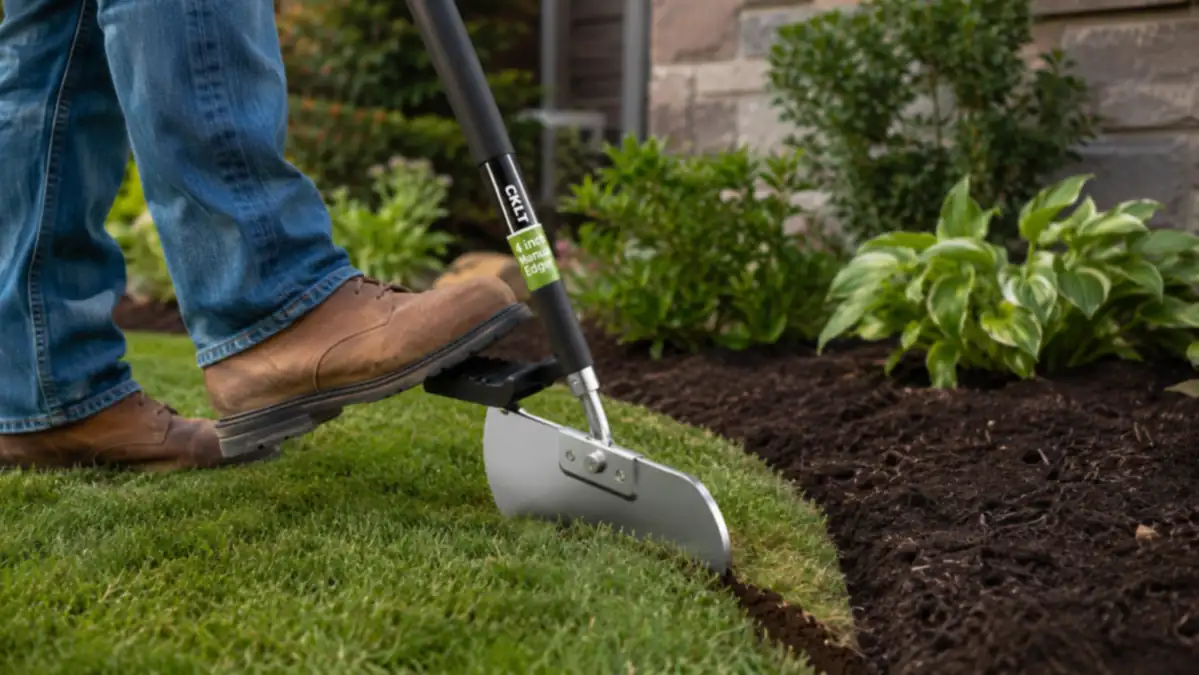
Cost is the obvious one. Check the current price on the CKLT and you'll see it's a fraction of what a decent corded or battery electric edger runs, and there's nothing else to buy after that, no replacement battery pack, no extension cord long enough to reach the back border, no motor that eventually wears out. But the bigger win for me has been precision. The half-moon blade lets me follow a curve exactly the way I want it, around the base of a rose bush, along the wavy line of my flower border, tight around the oak tree's roots, in a way that an electric edger's spinning blade just doesn't match. I can stop mid-cut, adjust my angle by a couple of degrees, and start again without the tool fighting me. Gary's electric edger wants to keep moving forward in a straight-ish line, which is exactly what you want on a driveway and exactly what you don't want on a curved bed.
The other thing that sold me on keeping the manual edger as my main tool is how little there is to maintain. No cord to coil and store, no battery to remember to charge before I want to use it, no motor to worry about after a decade of sitting in a damp shed. I hose the CKLT's blade off when it's caked in mud, wipe it down, and hang it on its hook. That's the whole routine. It's also just quiet. I can edge the border at seven in the morning before work without a motor whine that wakes up half the street, which matters more than you'd think once you've got neighbors close enough to hear a power tool through a bedroom window.
A clean edge without a cord, a battery, or a single moving part to maintain
The CKLT's tempered spring steel blade and wide footplate cut a precise line around curves and tree roots that a spinning electric blade struggles to match, and there's nothing to charge or replace. Check today's price and current rating on Amazon.
Amazon Check Today's Price on Amazon →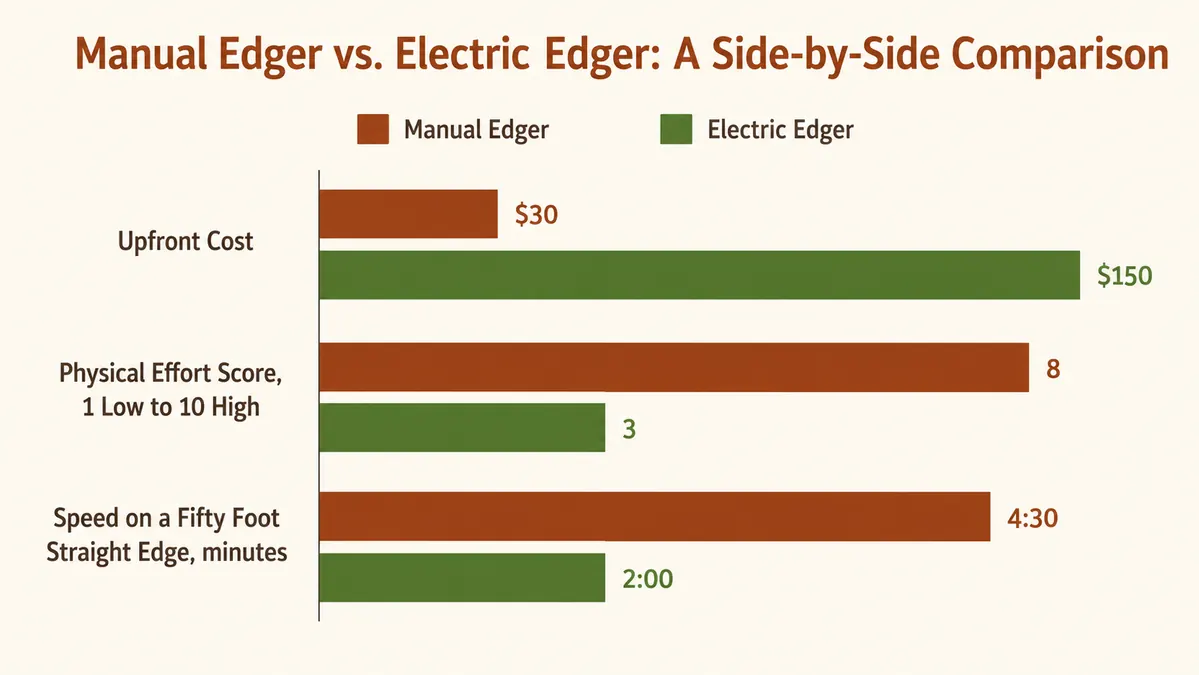
Where a Corded Electric Edger Wins
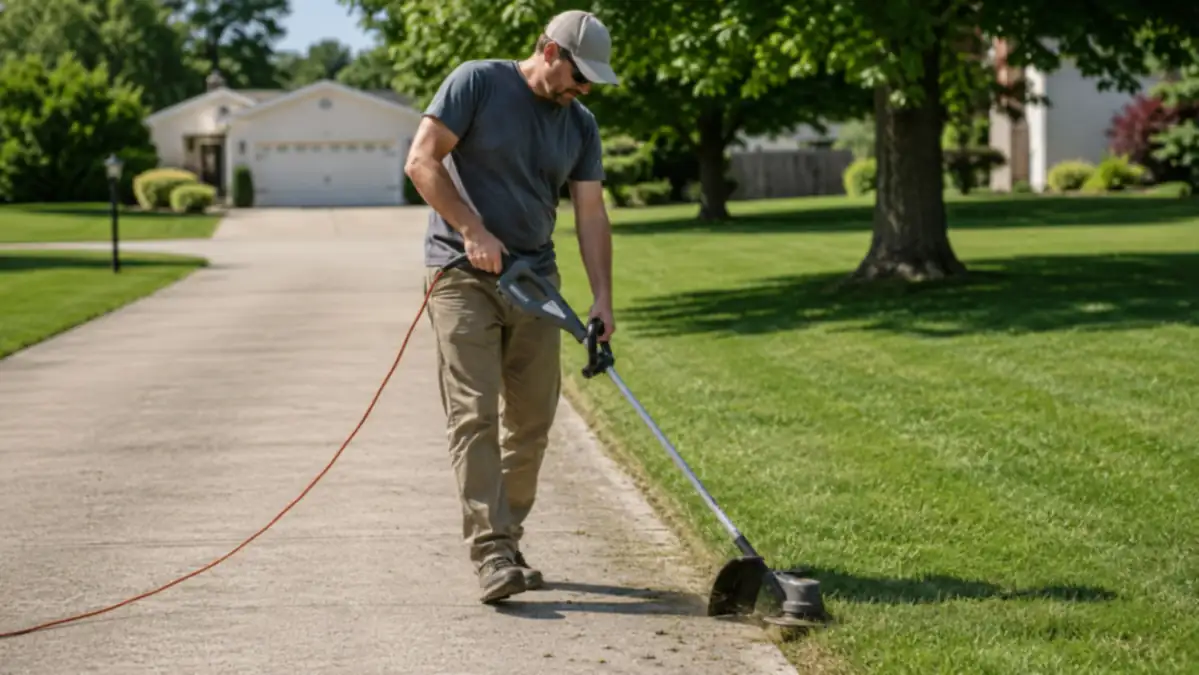
None of that means the electric edger is the wrong tool, and I'd be lying if I told you otherwise. On Gary's driveway apron and the long straight run along his front walk, his electric edger is simply faster. A power blade spinning at full speed chews through that same distance in a fraction of the time my half-moon blade takes, because I'm doing the cutting with my own leg pressing the footplate into the soil, step after step, the whole length of the run. On a short border that's nothing. On forty or fifty feet of straight driveway edge, it adds up to real minutes, and minutes add up over a whole season of weekly edging.
Physical effort is the other honest point in the electric edger's favor. My CKLT works by putting my body weight through the blade with every step, which is exactly why it gives me that control on curves, but it also means my legs and lower back are doing real work over a long run. Gary just walks his electric edger along the line and lets the motor do the cutting. If you've got a bad knee, a bad back, or a driveway and sidewalk edge that adds up to more than a hundred feet of straight line, that difference in effort is not a small thing, and I won't pretend a manual edger is the better choice for every yard or every gardener.
The One Job Where the Electric Edger Isn't Even Close
The clearest win for the electric edger showed up around my oak tree, where the roots have pushed up close to the surface and the soil underneath has gone hard and compacted over twenty years of the tree drinking up whatever water is nearby. My CKLT still gets through it, but it takes real effort, rocking the blade, working it in a few inches at a time, sometimes stepping back and coming at the same spot twice. Gary's electric edger just powers through that compacted, root-bound ground without me having to lean into it. If your yard has a lot of mature trees with roots close to the surface, or soil that turns hard as a sidewalk by August, that's a genuine point in the power tool's favor and I'd tell you that straight.
What Changed My Mind After a Full Season Edging With Both
Going into this, I expected the electric edger to win almost everything, faster usually means better in my experience with other yard tools. That's not how it played out. On the curves around my raised beds and the border, and around that oak tree once I got past the compacted ring right at the trunk, the manual edger's control actually mattered more than the electric edger's speed. Gary's edger left a slightly wavier line on curves than I liked, because it's built to move forward at speed, not to be nudged a few degrees at a time. My full review of the CKLT after six months of regular use gets into exactly how that blade has held up, but the short version is that the control stayed consistent the whole season.
By the end of the season the split had settled into something predictable, even though I only had one edger of my own the whole time. If I had a long driveway or a straight sidewalk edge like Gary's, I'd want an electric edger in the shed alongside my CKLT, not instead of it. For a yard like mine though, mostly curves, raised beds, and a border that winds along the fence line, the manual edger did the job better more often than it did worse. My honest review of the CKLT covers the one real complaint I have with it after a full season, which has nothing to do with this comparison.
I didn't expect the slower tool to win. But on every curve in my yard, the manual edger's control beat the electric edger's speed, and speed only mattered on the one stretch of yard I don't actually have.
Who Should Buy Which
If your yard is mostly straight runs, a long driveway apron, a sidewalk edge, a lot of linear footage to cover every week, and your knees or back would rather not do the walking-and-pressing that a manual edger requires, an electric edger is the more honest recommendation and I won't talk you out of it. It's also the better call if you've got mature trees with root systems that have turned the soil to something closer to concrete, since the motor just handles that compacted ground with less fuss than a half-moon blade worked by hand.
If your yard looks more like mine though, raised beds, a curved border, a lawn edge that bends around flower beds instead of running in a straight line for fifty feet, the CKLT earns its keep on cost alone and then keeps earning it on control. It's also the one I'd point a first-time edger toward, since there's no cord to manage, no battery to remember, and nothing to learn beyond finding a comfortable stance and letting the footplate do the work. For more on how mine has held up across an entire season of regular use, my long-term review covers the wear pattern on the blade and whether it's still worth the money six months in.
For curves, borders, and raised beds, this is the edger that actually follows the line
No cord, no battery, no motor to maintain, just a tempered steel blade and a wide footplate built to cut a clean edge around beds and trees. See the current price and rating on the CKLT border edger on Amazon.
Amazon Check Today's Price on Amazon →